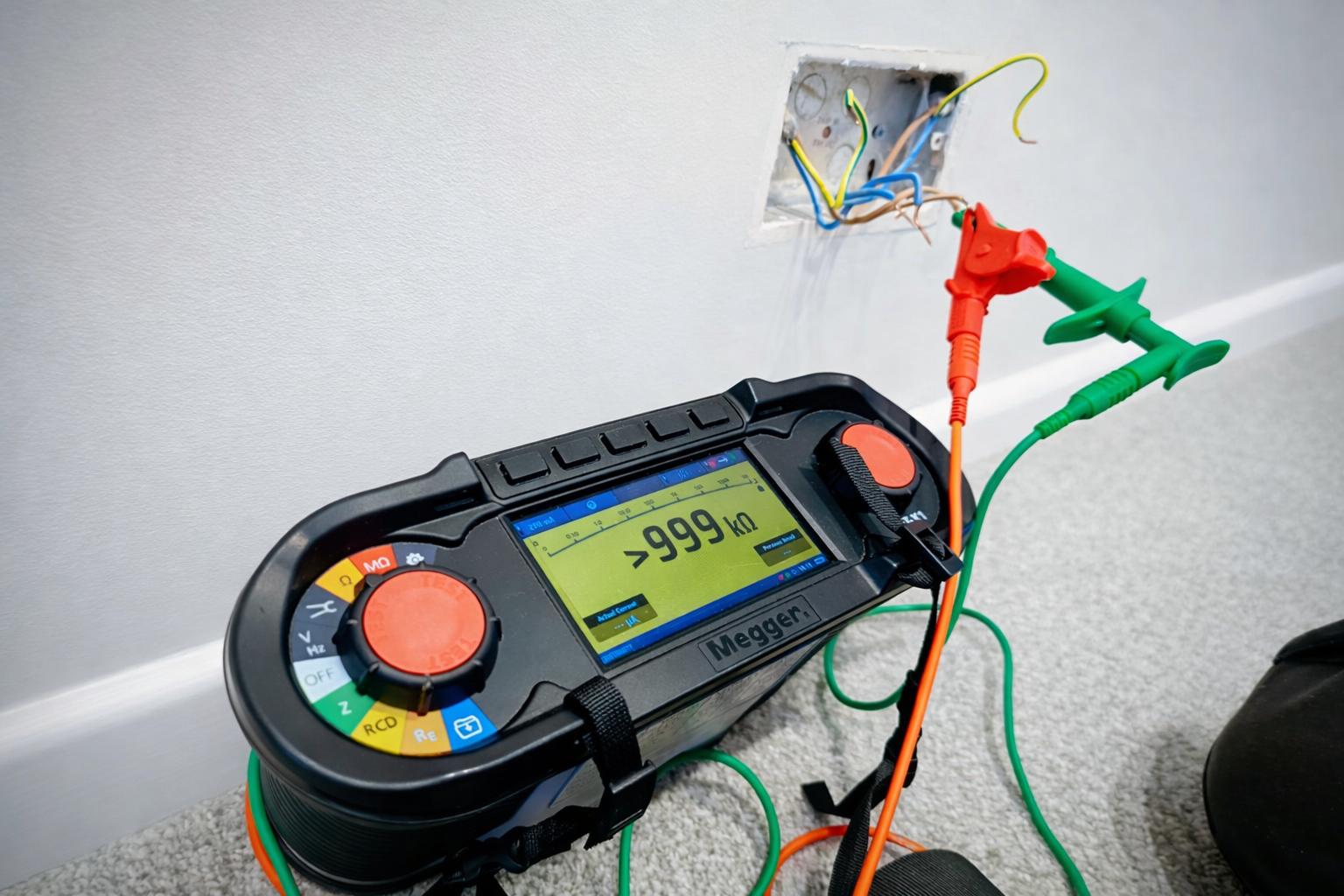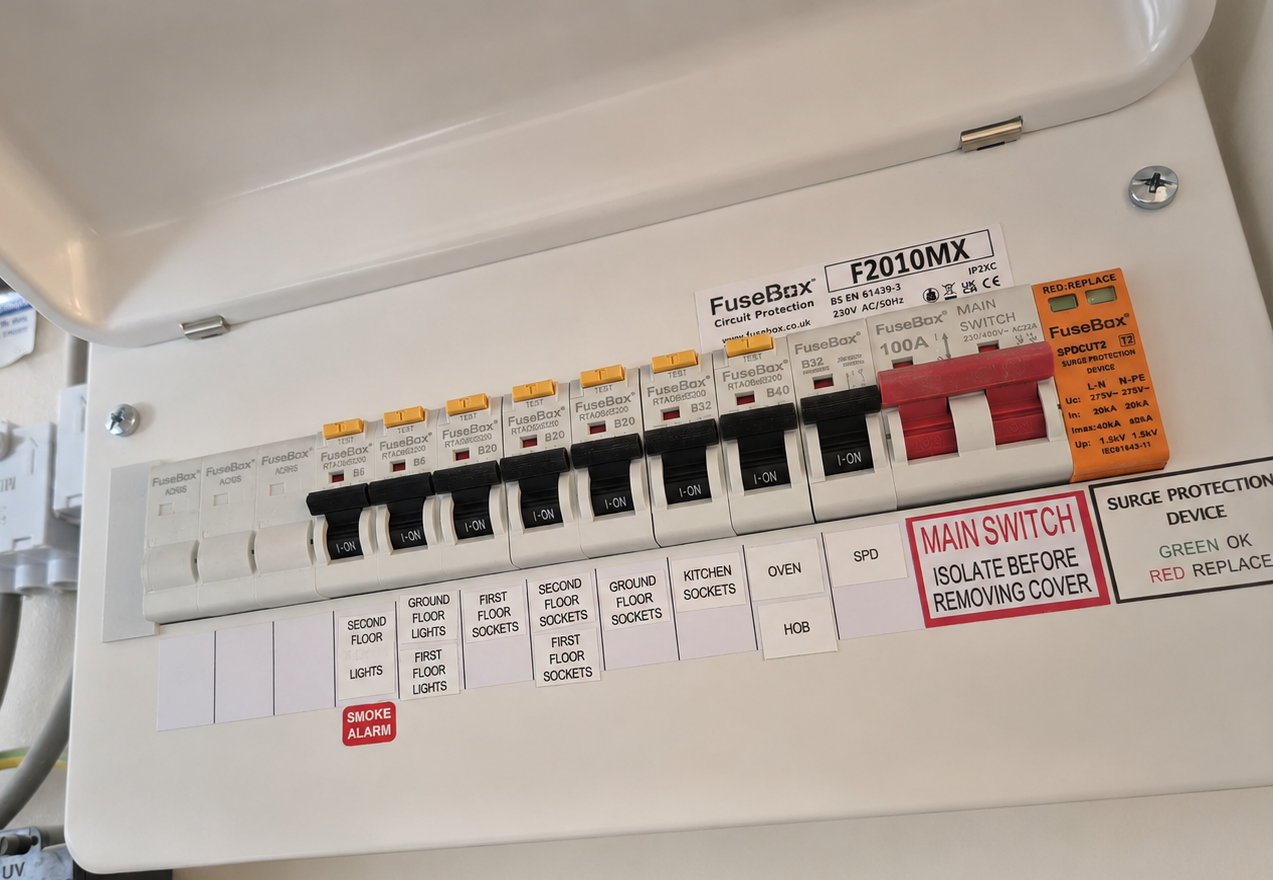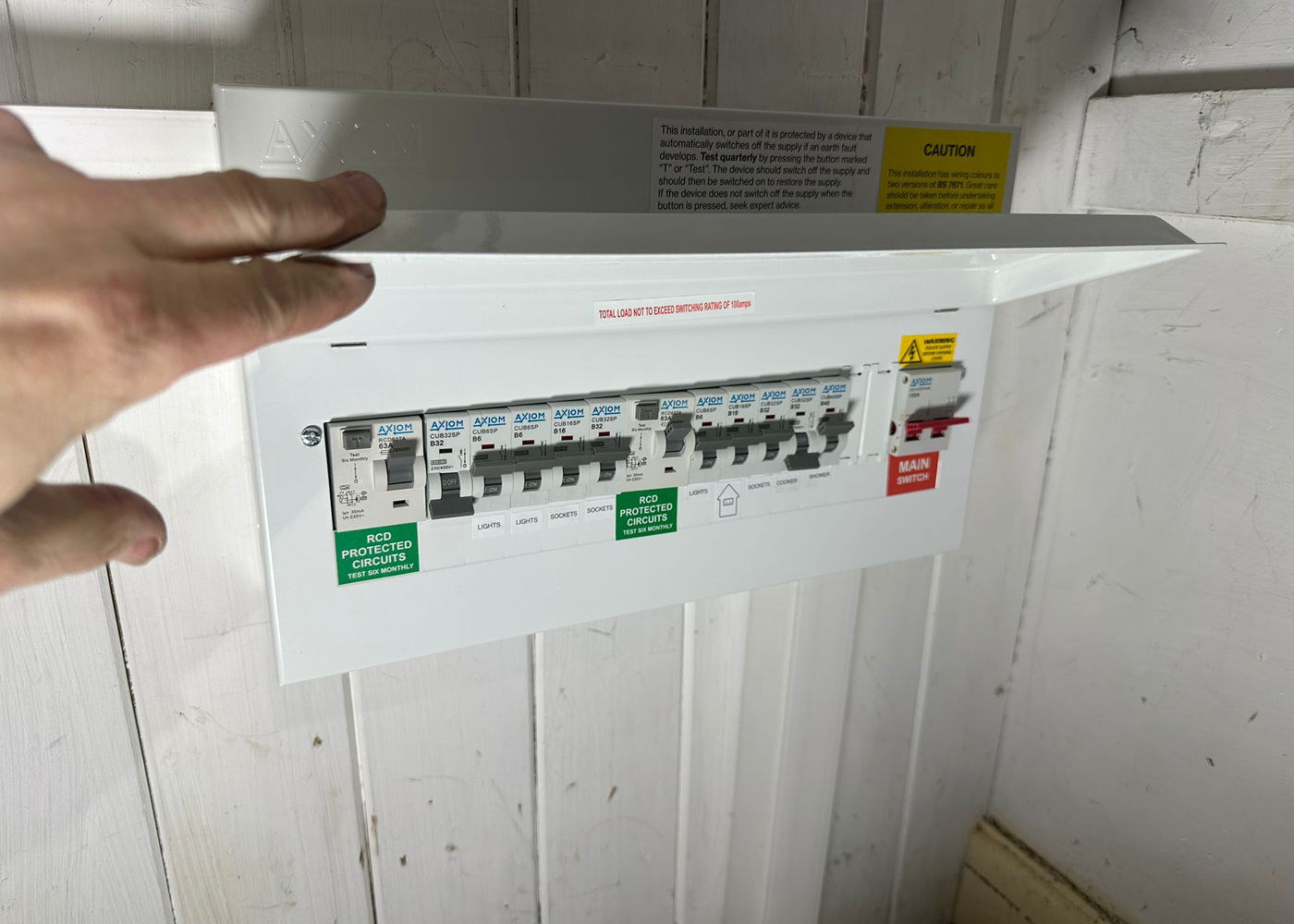
The standard the work is done to
BS 7671, the IET Wiring Regulations, current edition. It governs how circuits are designed and protected, how quickly a circuit has to disconnect under fault, what has to be tested and what has to be recorded.
It is not optional and it is not a house style. When we say a job is certified to BS 7671, that means specific measurements were taken, compared against required values, and written down where you can check them.
Part P and notifiable work
Part P of the Building Regulations covers electrical safety in dwellings. Certain work has to be notified to building control: a new circuit, a consumer unit replacement, and work in a location containing a bath or shower.
We are registered to notify, so it is handled as part of the job rather than left as your problem. Unnotified notifiable work is the single most common thing to surface awkwardly halfway through a house sale, and it is far cheaper to do properly than to regularise later.
Certificates and what each one is for
- Electrical Installation Certificate (EIC). A new circuit or a consumer unit replacement.
- Minor Electrical Installation Works Certificate. An addition or alteration to an existing circuit.
- Electrical Installation Condition Report (EICR). A periodic inspection of the whole installation, with observations coded C1, C2, C3 or FI by severity.
- Schedule of test results: the actual measured readings. This is the document worth keeping, because it is the only one that lets anyone check the work later.
Safe isolation, every single time
Prove the tester on a known live source. Prove the circuit dead. Prove the tester again. Lock off so it cannot be switched back on by someone who does not know you are working on it.
It takes about ninety seconds and it is the difference between a routine job and a fatality. Anyone who skips it in your house on a Tuesday will skip it in someone else's on a Saturday.
What to do before we arrive
None of this replaces getting an electrician out. It is what genuinely helps in the meantime.
- Burning smell: switch off at the main switch on the consumer unit if it is safe to reach, and keep people out of the affected room.
- A breaker that keeps tripping: stop resetting it. It is protecting you from something real, and repeatedly forcing it back on is asking the fault to become a fire.
- Water coming through a light fitting: turn the lighting circuit off at the board, do not touch the fitting, and do not stand in anything wet to do it.
- A scorched or discoloured socket or switch: turn that circuit off, unplug nothing from it, and keep people away.
- Someone has had a shock: do not touch them until the supply is off. Ring 999 first. An electric shock can affect the heart hours later even when the person feels fine.
- Smell gas as well as electrical burning: leave the property and ring the National Gas Emergency Service on 0800 111 999 before anything else.