Why it's one fault, not several
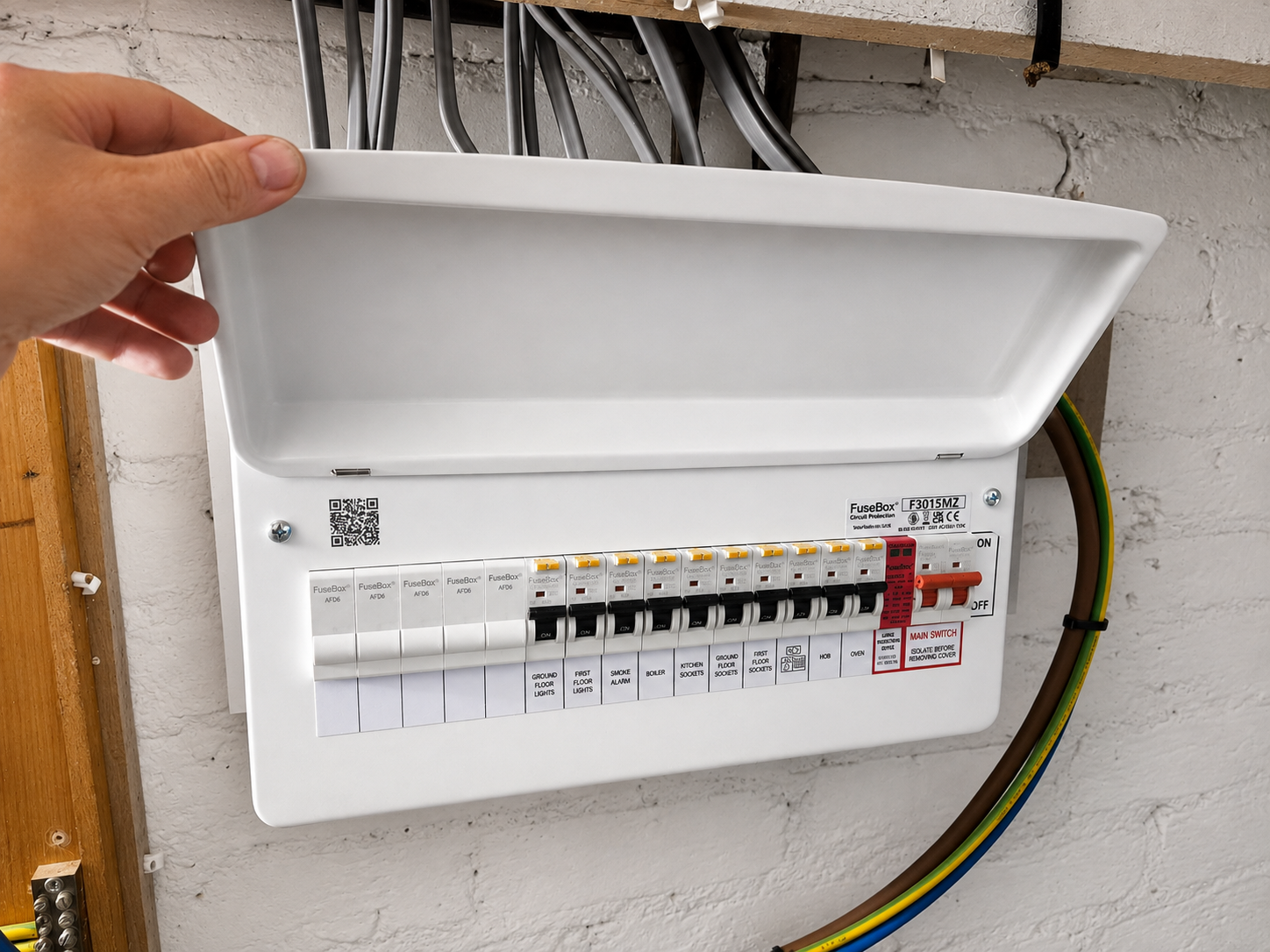
Most consumer units fitted since the mid-2000s use a split-load design: circuits are divided across two RCDs rather than each circuit having its own individual protection. That keeps the board cheaper to build, but it means one earth fault on a single circuit takes out every other circuit sharing that RCD with it. Often an unhelpful-looking combination, like upstairs lights and downstairs sockets, because circuits are grouped by whatever was practical to wire, not by room.
So when "half the house" goes dark, it's very rarely half the house's worth of problems. It's one leak to earth, on one circuit, that's tripped the RCD covering its whole group.
How to check it's this, not a power cut
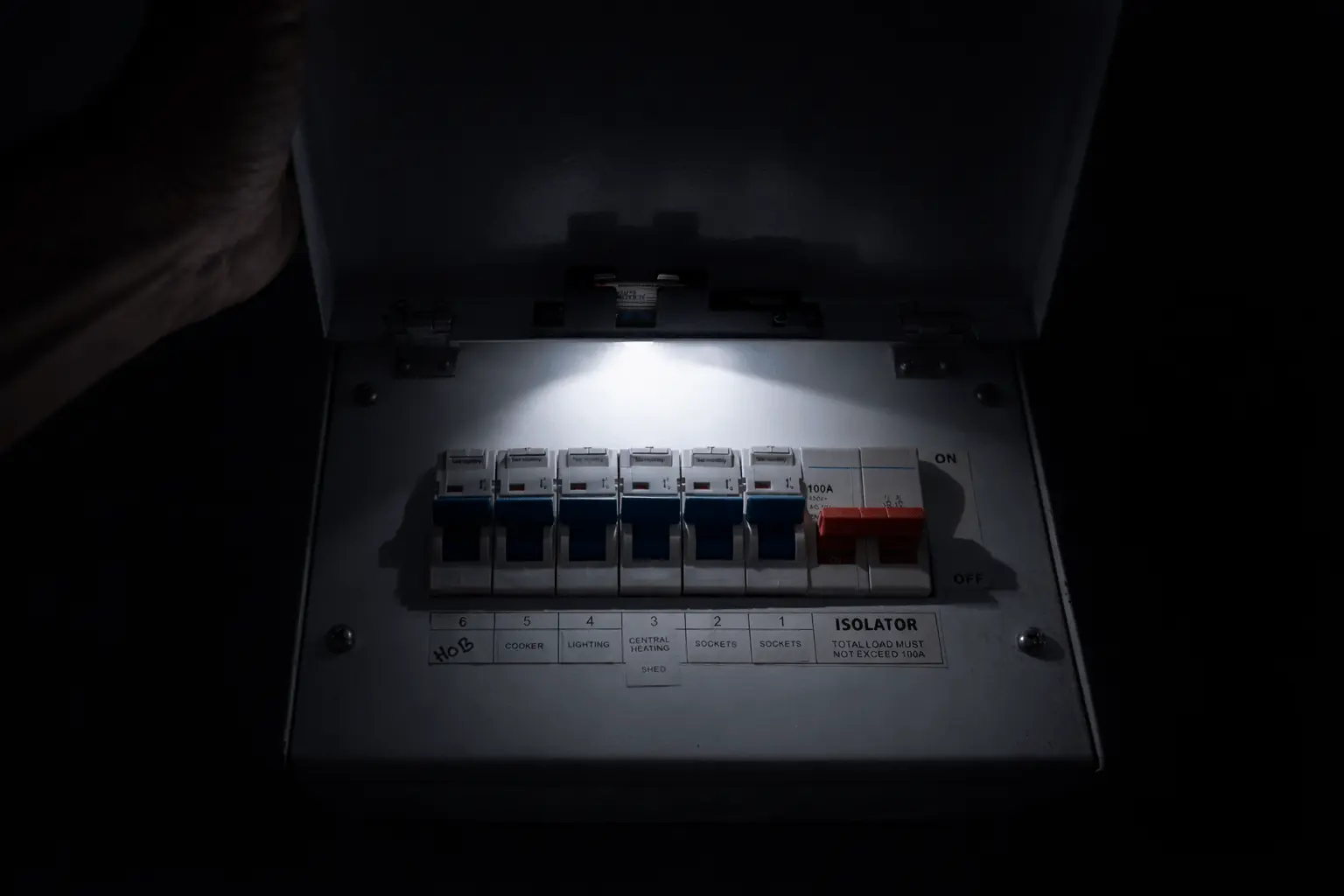
- Open the consumer unit. If one of the two RCDs has flipped to off while the other is still on, that confirms it. This is an internal fault, not a supply problem.
- If both RCDs are on but you still have no power anywhere, or your neighbours are also without power, that's a genuine power cut, different problem, different page. See what to do during a power cut.
- Try resetting the tripped RCD once. If it holds, the fault may have been transient (a one-off, like a spike of moisture). If it trips again immediately, leave it off.
- Note which rooms and circuits are affected. It helps narrow down which circuit on that RCD is the actual culprit.
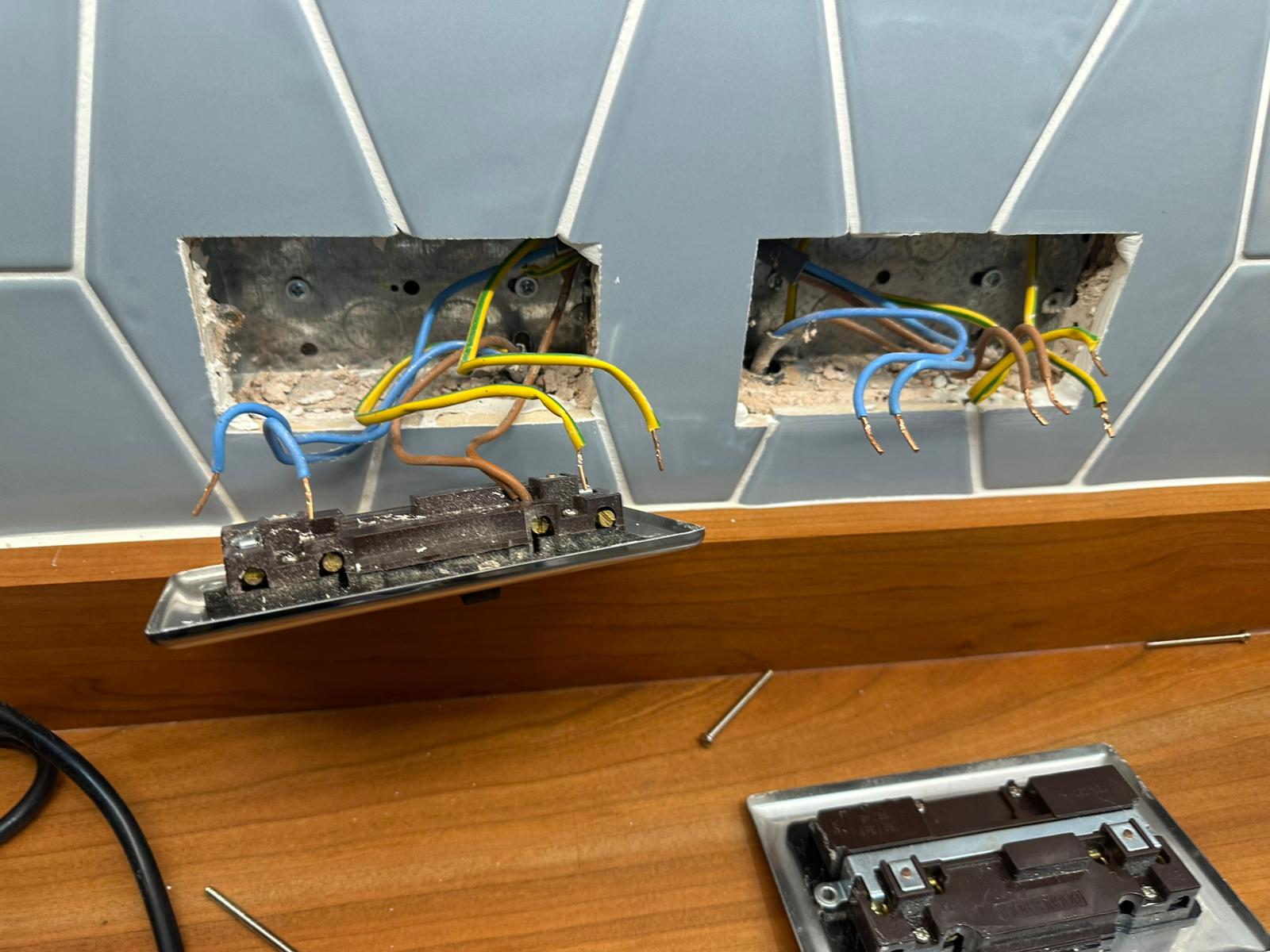
What's usually behind the fault
- A failing appliance somewhere on that group of circuits. A washing machine, dishwasher or immersion heater leaking current to earth as it degrades.
- Water ingress into an outside light, garage supply, or a junction box in a loft or under a flat roof, feeding into that circuit group.
- A damaged cable behind a wall or in a loft, on one of the circuits sharing that RCD.
- The RCD itself, if it's drifted out of specification with age. Less common, but worth ruling out if every circuit on that side tests clean.
What not to do
Don't keep resetting the RCD hoping it holds. Don't try running an extension lead from the working half to the dead half as a long-term fix. It risks overloading the working RCD and doesn't address the actual fault. And don't assume it'll sort itself out; earth leakage faults from water or a failing appliance tend to get worse, not better, on their own.
How we narrow it down and fix it
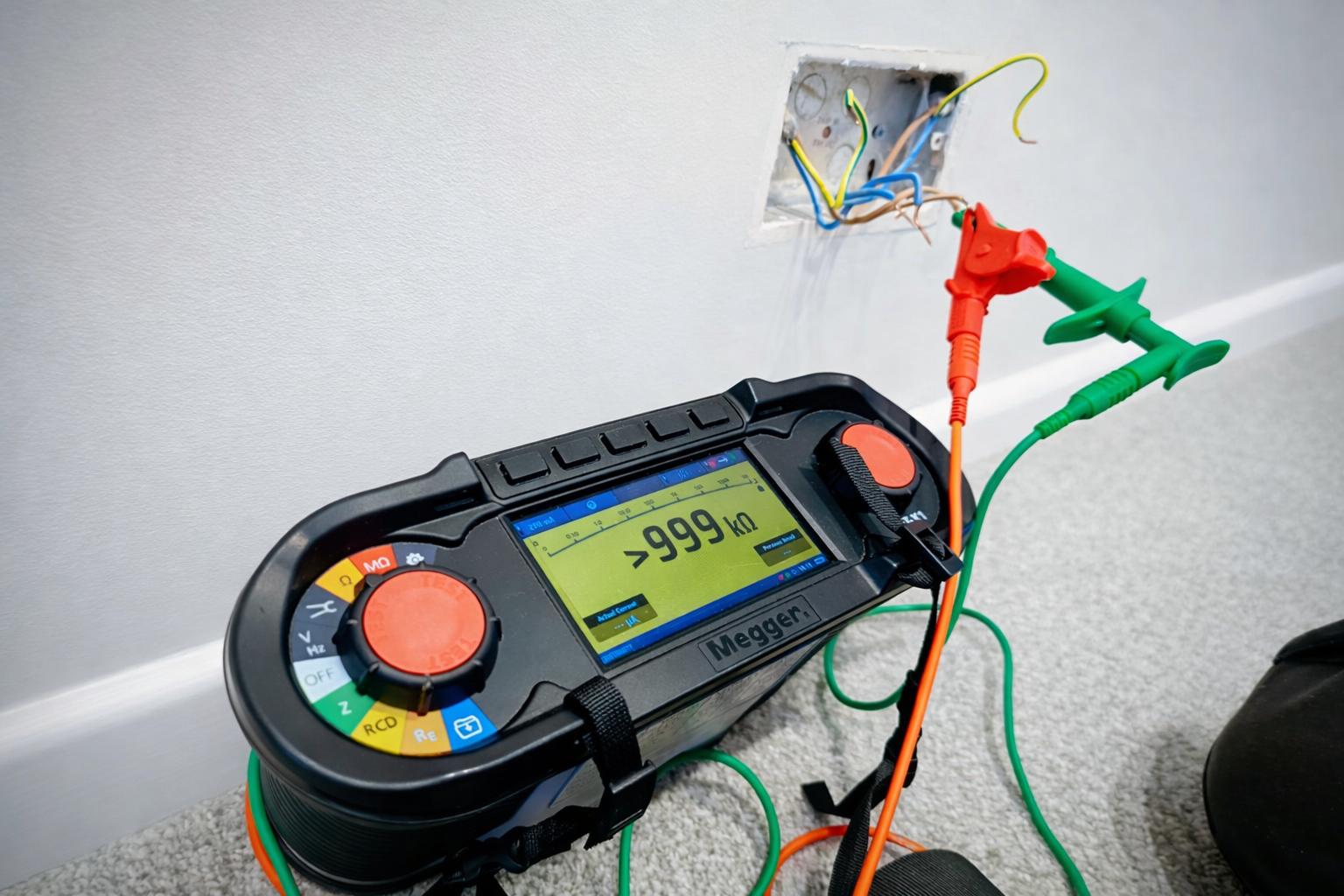
We isolate every circuit sharing the tripped RCD, then bring them back one at a time while testing, rather than guessing from the symptoms alone. Once the faulty circuit is identified, insulation resistance testing pinpoints roughly where along it the leakage is happening, which usually means the repair is targeted rather than exploratory.
If a split-load board keeps causing this kind of whole-group blackout on a property, we'll also tell you honestly whether upgrading to individual RCBOs per circuit is worth it. It isolates future faults to one circuit instead of a group, which for a lot of households is worth the one-off cost after living through this once.
Common Questions
Why does it always seem to be an odd combination of rooms?
Because circuits are wired to a split-load board in whatever order was practical when the house was built or last rewired, not room by room. Upstairs lights and downstairs sockets sharing one RCD is a genuinely common, if unhelpful-looking, arrangement. It's still one fault, just spread across an inconvenient set of circuits.
Is this the same as a power cut?
No. A power cut affects the whole property, and often the whole street, with everything dead including the consumer unit's own indicator lights. If half your house is out but the other half works fine, the supply into the property is fine. The fault is inside your consumer unit or wiring.
Can I just move everything to the working half?
As a very short-term workaround for something urgent, possibly, but it's not a fix and it risks overloading the working RCD by asking it to carry more than its share. The right answer is finding and clearing the fault, not permanently redistributing your life around it.
Would individual RCBOs actually have prevented this?
Yes, that's precisely the problem they solve. On a board with RCBOs, one faulty circuit trips on its own and every other circuit, including the ones sharing what would otherwise be its RCD, stays live. It turns a half-house blackout into one dead socket.
How long does it usually take to find which circuit is at fault?
With the board isolated and tested systematically, usually well within the visit, often the first hour. It takes longer if the fault is intermittent (only appearing under certain conditions, like when damp) rather than constant, since we may need to recreate those conditions to catch it in the act.