Normal arcing, or an actual fault?
A tiny blue spark exactly at the instant you push a plug in, from a socket that works perfectly otherwise, is a known and generally harmless characteristic of how sockets complete a circuit. It's called switch arcing, and on its own it isn't cause for alarm.
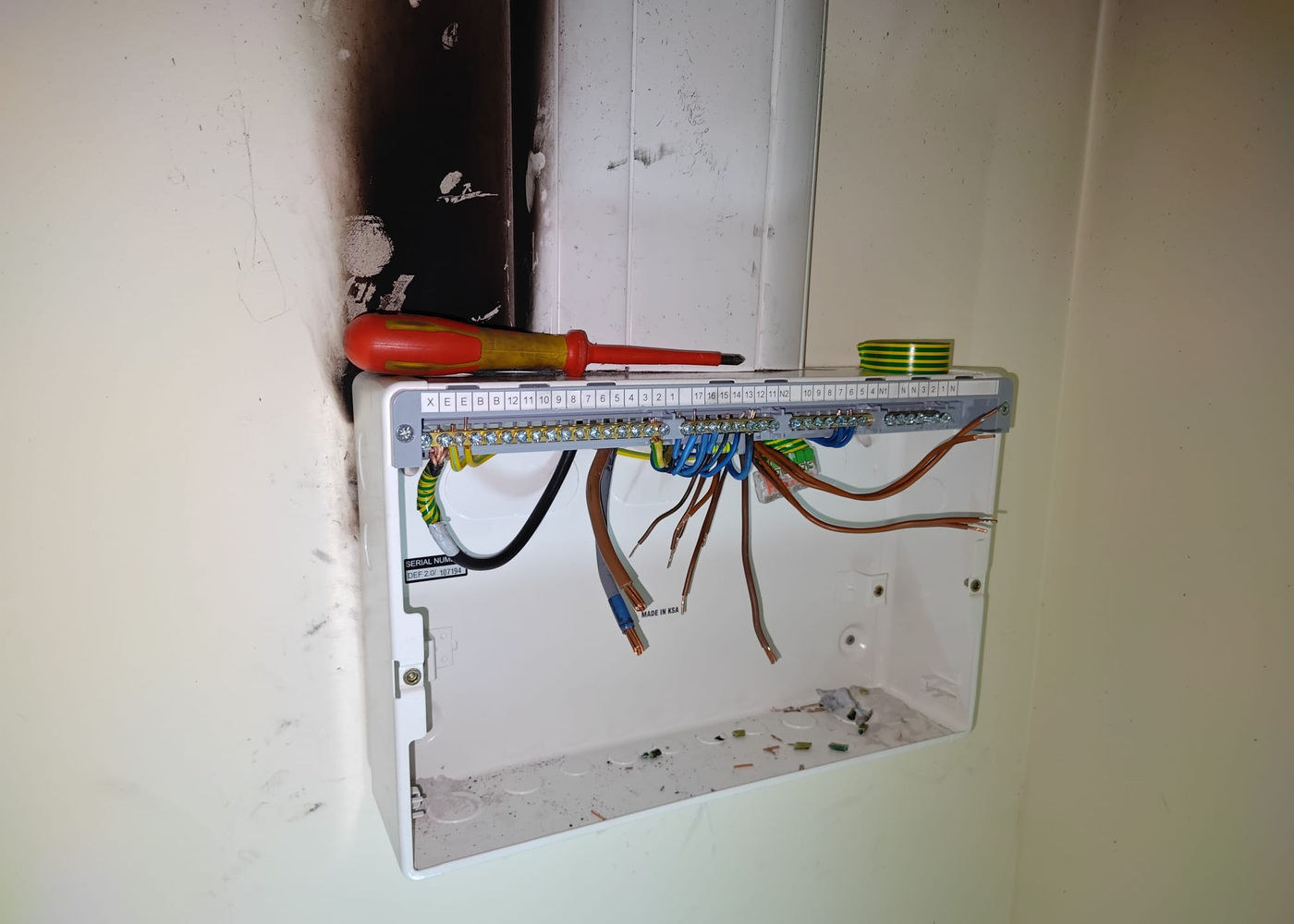
A fault looks different: bigger, louder, or a spark that happens even without plugging or unplugging anything. It might come with a smell, a crackling sound, discolouration around the socket, or a faceplate that's warm to the touch. It might be a switch that's suddenly started sparking after years of not doing so. Any of that has moved past normal.
What causes abnormal sparking
- A loose terminal. Wires inside the socket or switch that have worked loose over time make intermittent contact, arcing each time the connection breaks and remakes.
- Water or moisture. Damp behind a socket, from a leak or condensation, allows current to arc across a gap it shouldn't be able to cross.
- A damaged appliance plug or lead. Frayed cable, a cracked plug casing, or bent pins can spark at the point of connection rather than in the socket itself.
- Worn-out switch contacts. Light switches operated thousands of times over many years can develop pitted or worn contacts that arc on operation.
- Overloading. A socket or switch carrying more current than it's rated for runs hotter, and heat accelerates every other cause on this list.
A quick test you can safely run
- Note exactly when the spark happens. On insertion, on removal, or randomly with nothing being touched. Random sparking with nothing being handled is the most serious version.
- Try a different appliance in the same socket. If the spark happens regardless of what's plugged in, suspect the socket. If it only happens with one item, suspect that item's plug or lead.
- Look at the socket or switch faceplate for brown discolouration, cracking, or warmth. Any of those means stop using it now.
- If it's a switch, listen for a crackling sound as you operate it, separate from the click of the mechanism itself.
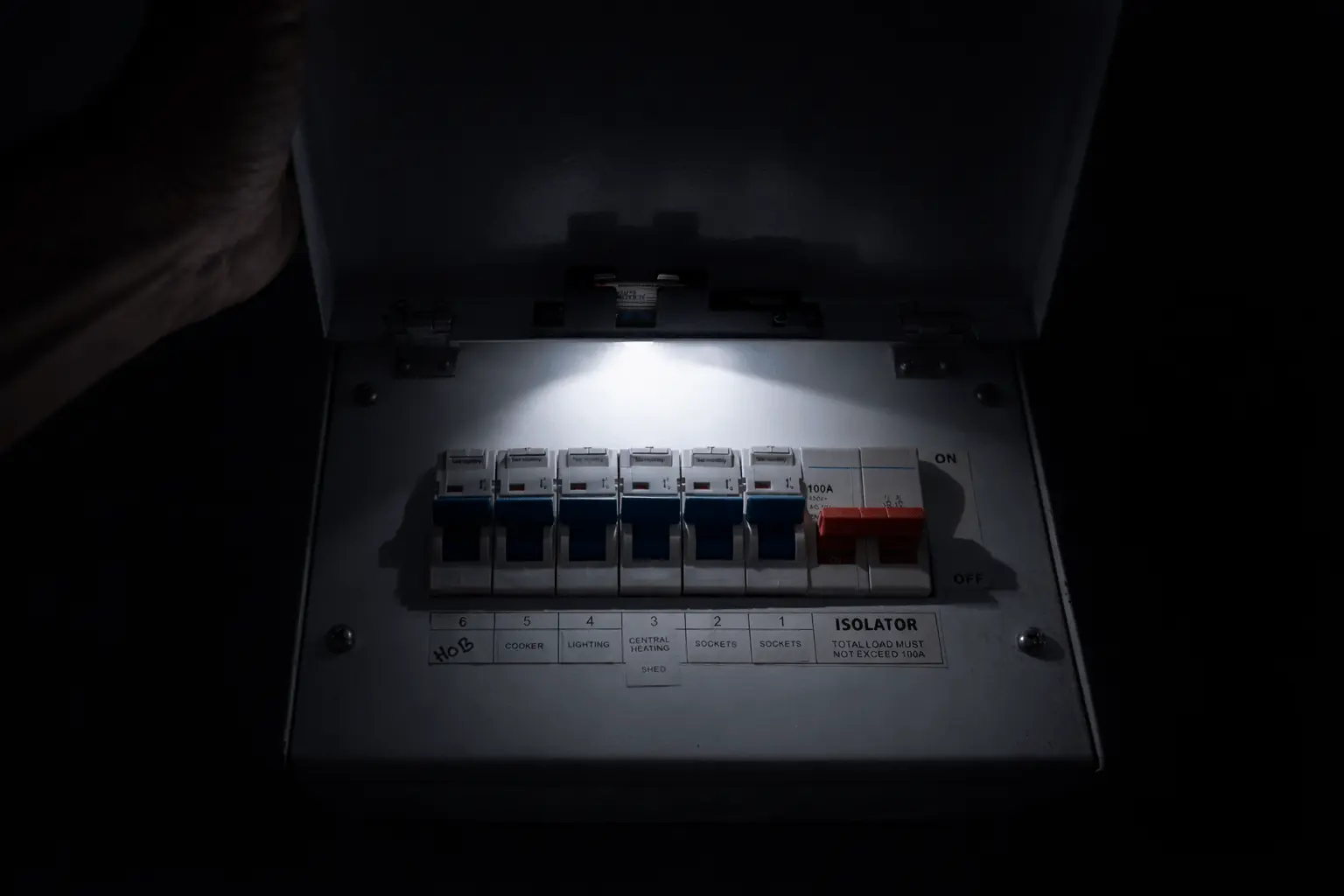
If in doubt, switch that circuit off at the consumer unit and stop using the fitting until it's been checked.
Warning signs that mean call now
- Sparking that happens repeatedly, or with nothing being plugged in or switched.
- Any smell, discolouration, or heat at the fitting.
- A spark large enough to be visible from across the room, or one that's audibly loud.
- Sparking from a socket or switch in a bathroom, kitchen, or anywhere near water.
What we check and replace
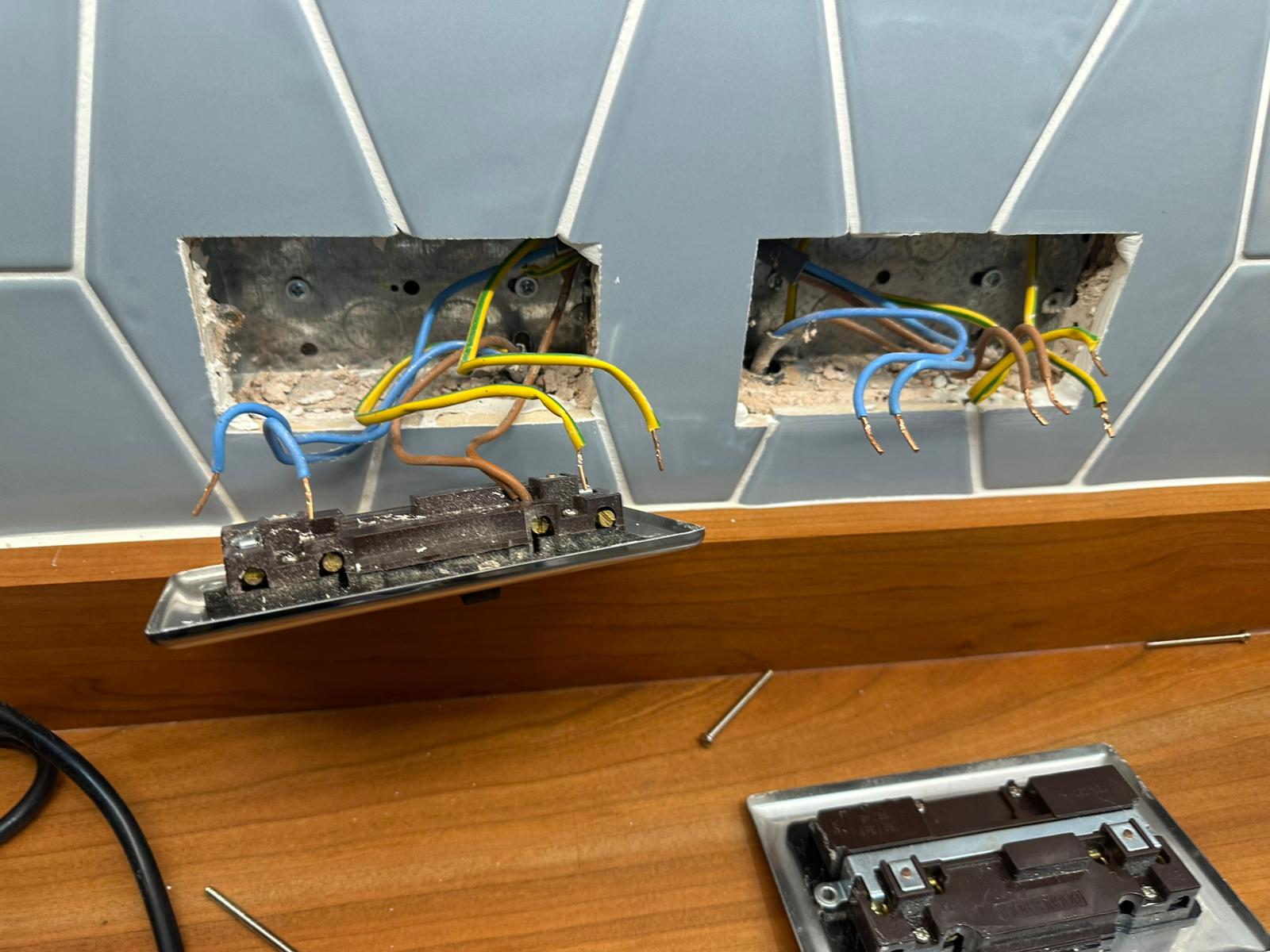
We isolate the circuit, remove the faceplate, and inspect the terminals and contacts directly rather than guessing from the outside. A loose terminal gets re-terminated properly; a socket or switch with pitted, worn or heat-damaged contacts is replaced rather than reused, because a contact that's already arced once is more likely to arc again. We test the repaired circuit before it goes back into service and certify the work to BS 7671.
Common Questions
Is a small spark when I plug something in always dangerous?
Not always. A brief, tiny blue spark exactly at the moment of contact, from a socket that otherwise works normally, is often harmless switch arcing. It's a small electrical discharge as the connection completes, and it's a known characteristic of how sockets work. It only becomes a concern if it's large, loud, leaves marks, or happens every single time from a socket that used to be fine.
A light switch sparks when I turn it on. Is that the same thing?
Similar principle, and equally worth the same test: is it small, brief and consistent with how it's always behaved, or has it started recently, got bigger, or come with a smell or discolouration? A switch that's begun sparking after years of not doing so has developed a fault in the contacts or wiring and should be looked at.
Can I just stop using a socket that sparks instead of getting it fixed?
You can as a short-term measure, but a socket that's sparking abnormally usually has a fault that doesn't stay contained to that one point. Loose wiring behind it can affect the whole circuit, or continue to deteriorate even unused. Isolating it is sensible while you wait for us, not instead of calling.
Is it the appliance or the socket that's at fault?
Test it by trying a different, known-good appliance in the same socket. If the spark happens regardless of what's plugged in, the socket or its wiring is the problem. If it only happens with one specific item, that appliance's plug or lead is more likely the cause.
What's the actual risk if I ignore a sparking socket?
Arcing generates heat at the point of the fault, and heat concentrated at a loose connection or damaged contact is exactly how electrical fires start. It's not guaranteed to happen quickly, which is precisely why sparking sockets get ignored for months before something worse happens.