Why some faults are genuinely hard to find
A dead circuit is easy. The jobs that get handed to us are usually the ones somebody else has already had a go at: the fault that only appears when it rains, the RCD that trips at four in the morning and never during the day, the socket that works fine until the tumble dryer reaches its heating cycle.
These are intermittent faults, and they share a common cause, something that is almost failing. Insulation that has degraded but not yet broken down. A terminal that has worked loose and only arcs when the cable warms and expands. Moisture tracking across a junction box that dries out by lunchtime. You cannot find any of these by looking. You find them by testing, and by testing under the conditions that provoke them.
How we actually trace a fault
The method is boring and it works. We follow the same sequence every time, because skipping steps is how people end up replacing a perfectly good consumer unit and still having the fault.
- Your account first. When does it happen? What's running at the time? Has anything changed. New appliance, building work, a leak, a new shower?
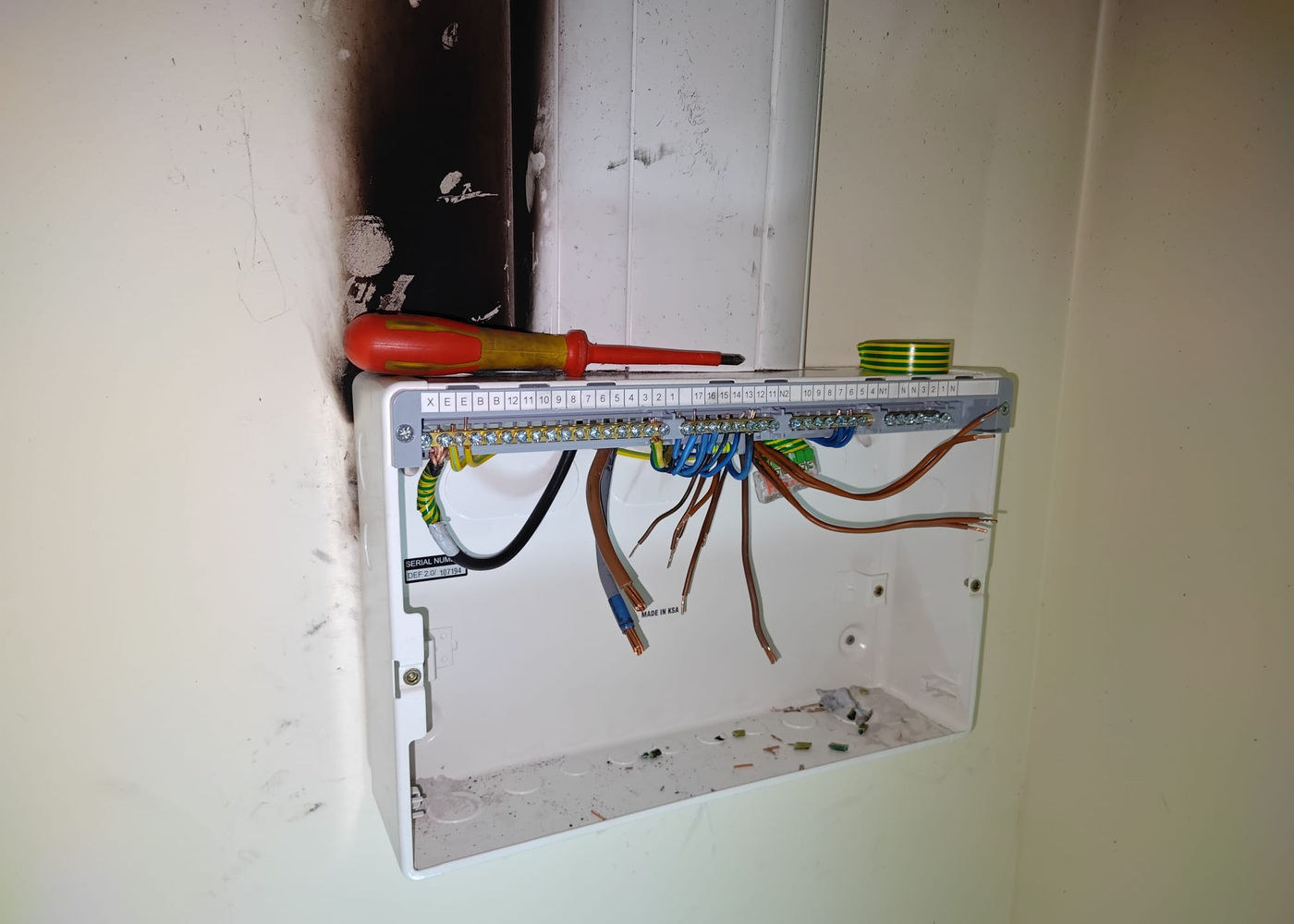
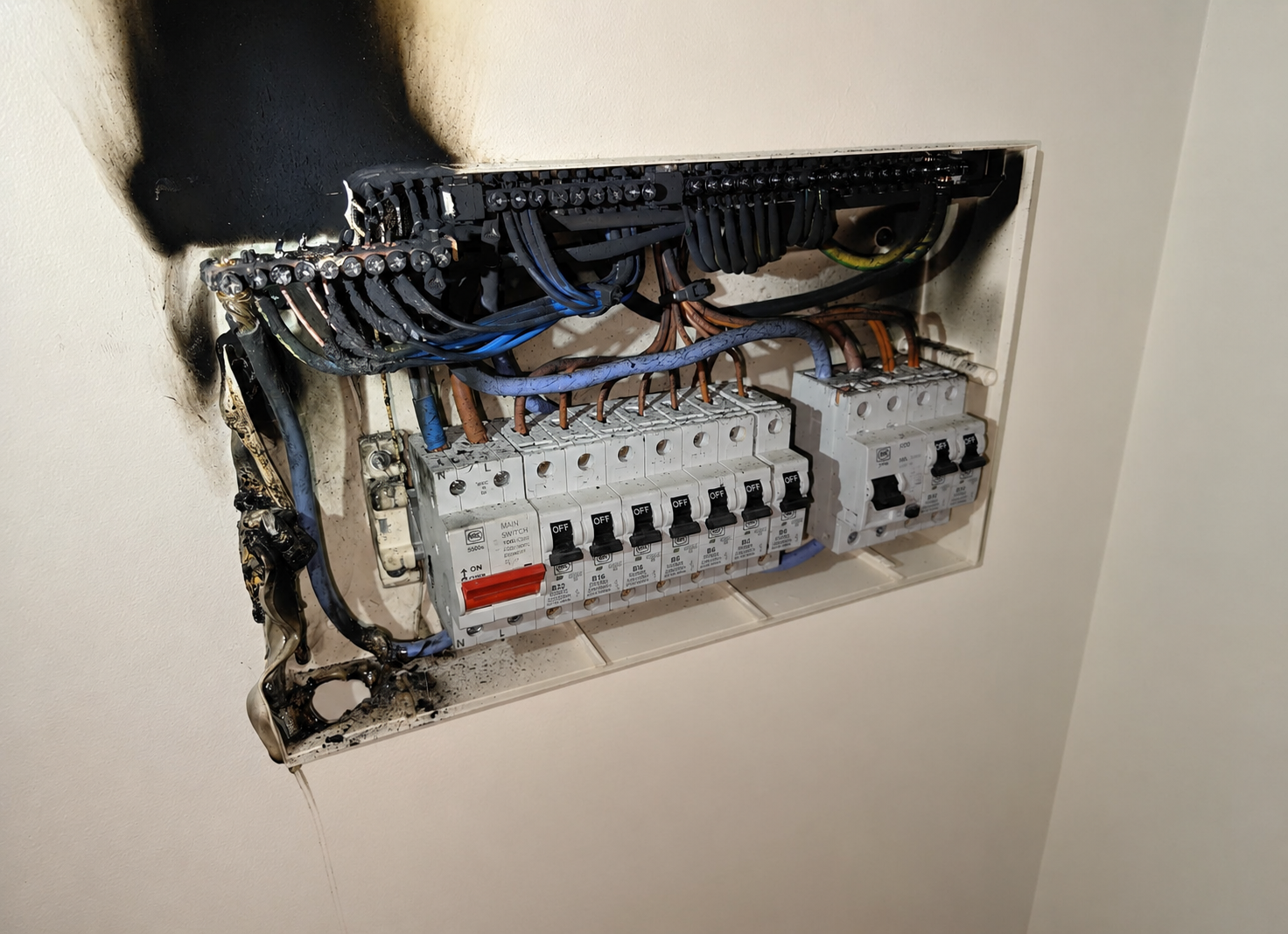
- Visual inspection. Scorching, moisture, rodent damage, DIY additions, undersized cable, missing earths, the usual suspects.
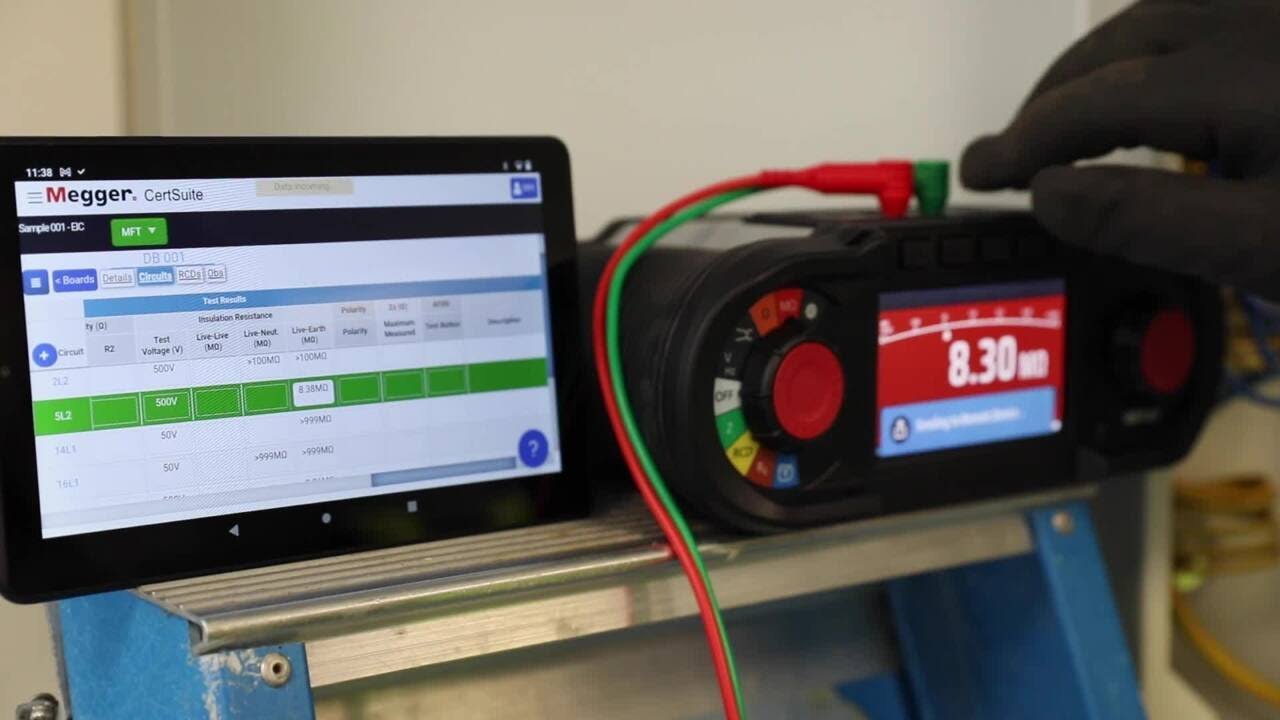
- Dead testing. Continuity of protective conductors, ring final circuit continuity, and insulation resistance. The test that finds degraded cable before it becomes a fire.
- Live testing. Earth fault loop impedance (Zs), prospective fault current, RCD trip times at half and full rated current.
- Divide and conquer. Split the circuit, retest, split again. Tedious, but it isolates the fault to a section of cable or a single accessory rather than a guess.
- Provoke it. For intermittents we load the circuit, run the offending appliance, or damp-test where water is suspected.
The faults we find most often
- Insulation breakdown in buried cable. Usually where a nail or screw has clipped a cable years ago, or where old rubber and lead-sheathed wiring has finally given up.
- Borrowed neutrals. A lighting circuit taking its neutral from a different circuit. Common in houses wired or extended in the 60s and 70s, and a reliable way to make an RCD trip for no obvious reason.
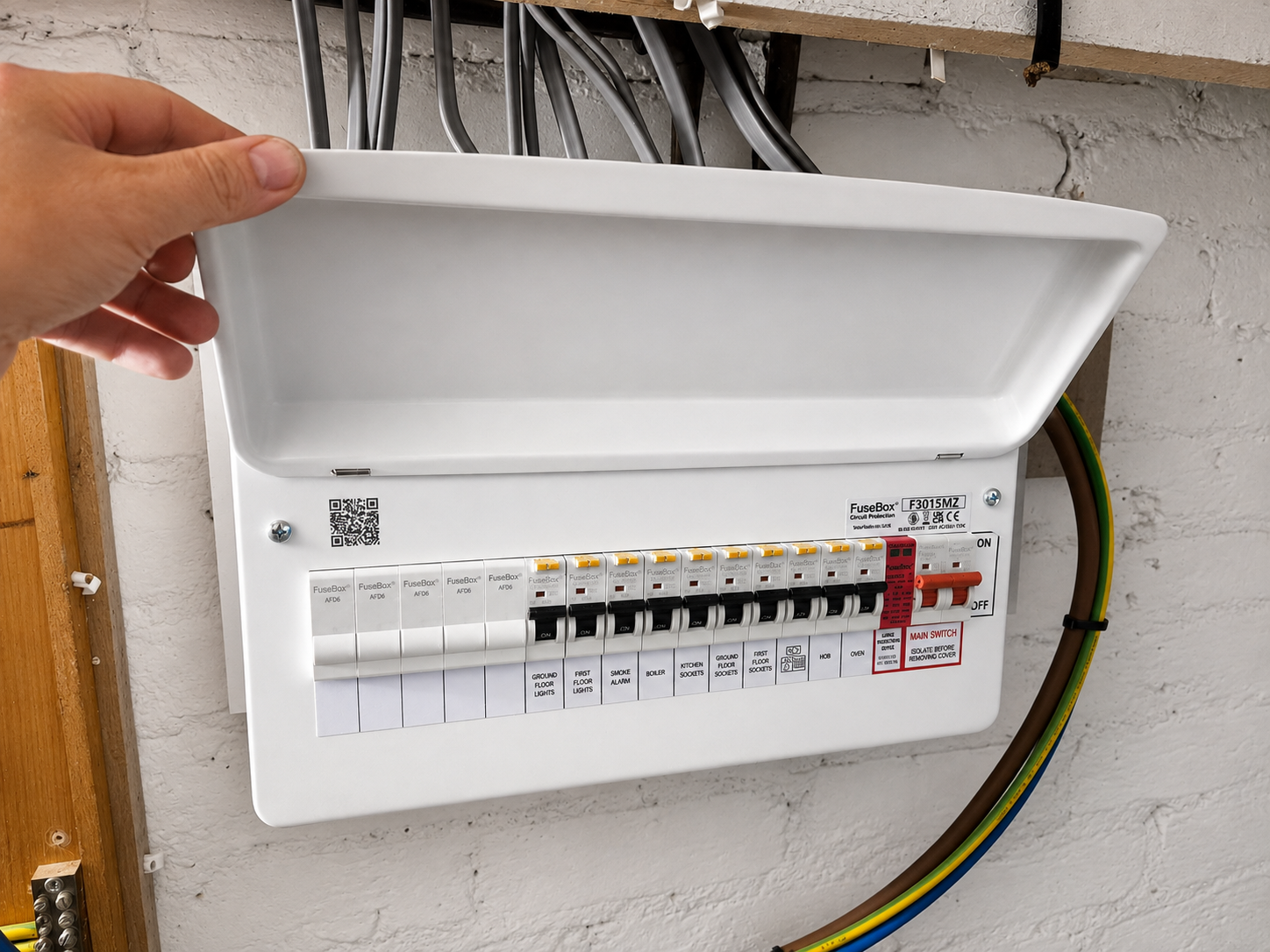
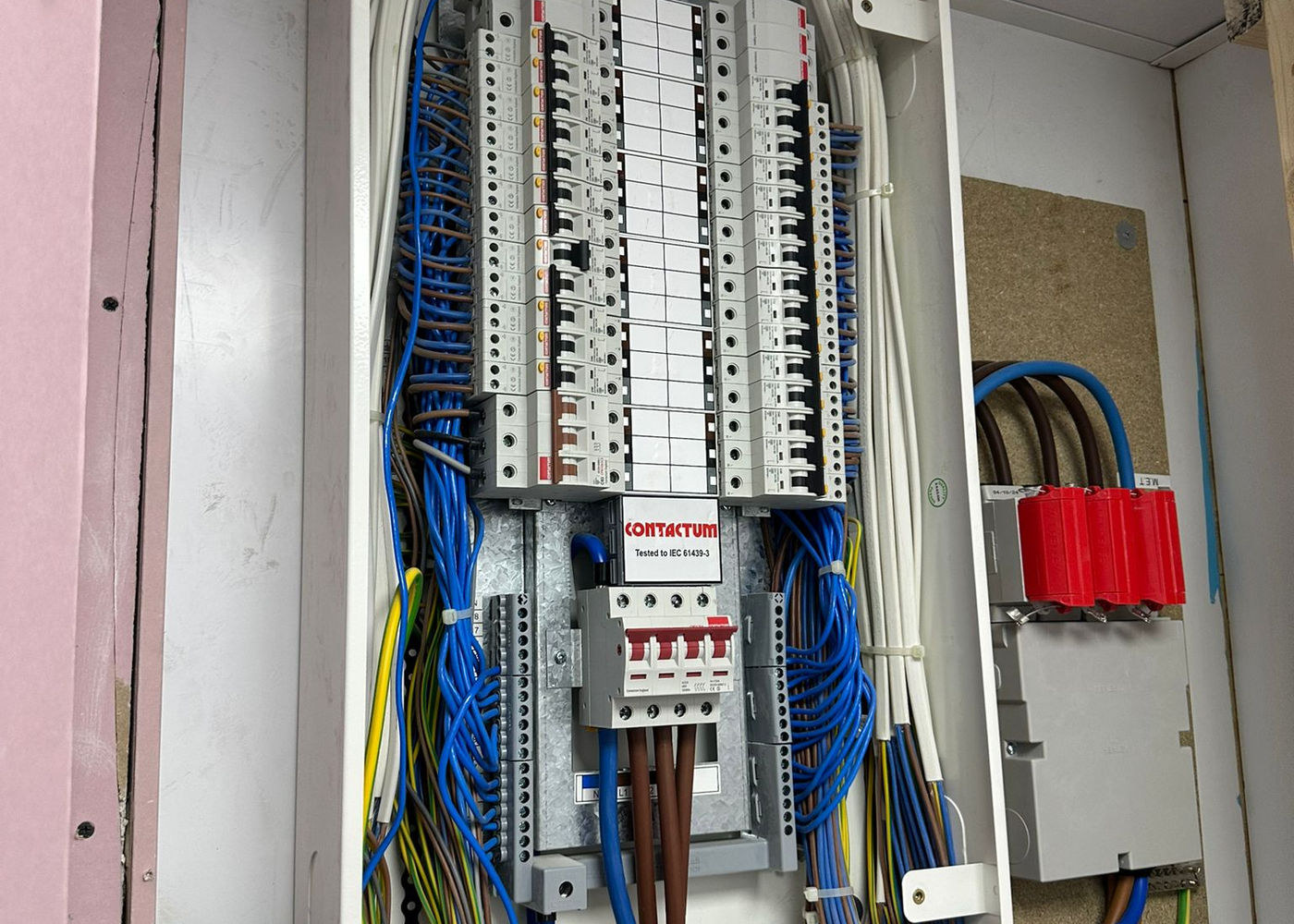
- Loose terminations. The single most common cause of overheating. Back boxes, ceiling roses, junction boxes above ceilings, and the neutral bar in the consumer unit.
- Water ingress. Outside lights, garage and shed supplies, under-sink sockets, and flat roofs above upstairs lighting.
- Failing appliances. Immersion heaters, washing machines, dishwashers and older fridges leak enough current to earth to trip a 30 mA RCD long before they stop working.
- Cumulative earth leakage. No single fault. Just a dozen modern appliances each leaking a milliamp or two until the total tips an RCD over the edge.
What you get at the end
A plain explanation of what was wrong and where, the test results that prove it, and the repair carried out and retested. If we find something outside the scope of what you called us for. And on older installations we often do. We'll tell you, show you, and let you decide. We don't inflate a fault find into a rewire.
How the fault actually gets fixed
We narrow rather than guess. The installation is split circuit by circuit and each half tested in turn until only the faulty section is left, which is slower than swapping parts but arrives at the real cause instead of an expensive coincidence.
That method only works in experienced hands. Every electrician here has at least 18 years behind them, is Part P registered and fully insured, and has met the same failures often enough to know which readings matter and which are a red herring.
The instruments do the deciding. Calibrated multifunction testers measure insulation resistance, continuity of protective conductors, earth fault loop impedance and RCD disconnection times, so the fault is proved by measurement and the repair certified to BS 7671.
Common Questions
How long does electrical fault finding take?
Straightforward faults are usually traced within an hour or two. Intermittent faults take longer by their nature, because the fault has to be provoked before it can be measured. We'll give you a realistic picture once we've done the initial tests rather than an optimistic one at the door.
My fault comes and goes. Is it worth calling someone out?
Yes, and the more detail you can give the better. Note the time of day, the weather, and what was switched on. An intermittent fault is a fault that hasn't finished developing, they very rarely resolve themselves.
What is a borrowed neutral?
It's where a circuit takes its live from one breaker and its neutral from another. The lights still work, so it goes unnoticed for decades, but it upsets RCD protection and makes safe isolation difficult. It's common in older Sussex housing stock and is one of the first things we look for with unexplained tripping.
Do I need to be in?
Someone needs to give us access and we'll need to switch the power off at points during testing. For tenanted properties we can arrange access directly with the tenant.
Can you find a fault another electrician couldn't?
Often, yes. Usually because we test rather than substitute parts. If a previous visit involved swapping components without measurements, the fault was never actually located.