Why faults have to be found while they are happening
The hardest faults are the ones that come and go. A circuit that trips only when the shower runs. A socket that dies only when it rains. A light that flickers when the fridge cuts in. By the time a weekday appointment comes round, the conditions have gone, and the fault has gone with them.
Testing an installation that is behaving itself is close to useless. Testing it while it is misbehaving is where the answer is. That is the entire argument for turning out at night, and it is why an out-of-hours electrician often costs less overall than three daytime visits that find nothing.
How we narrow it down
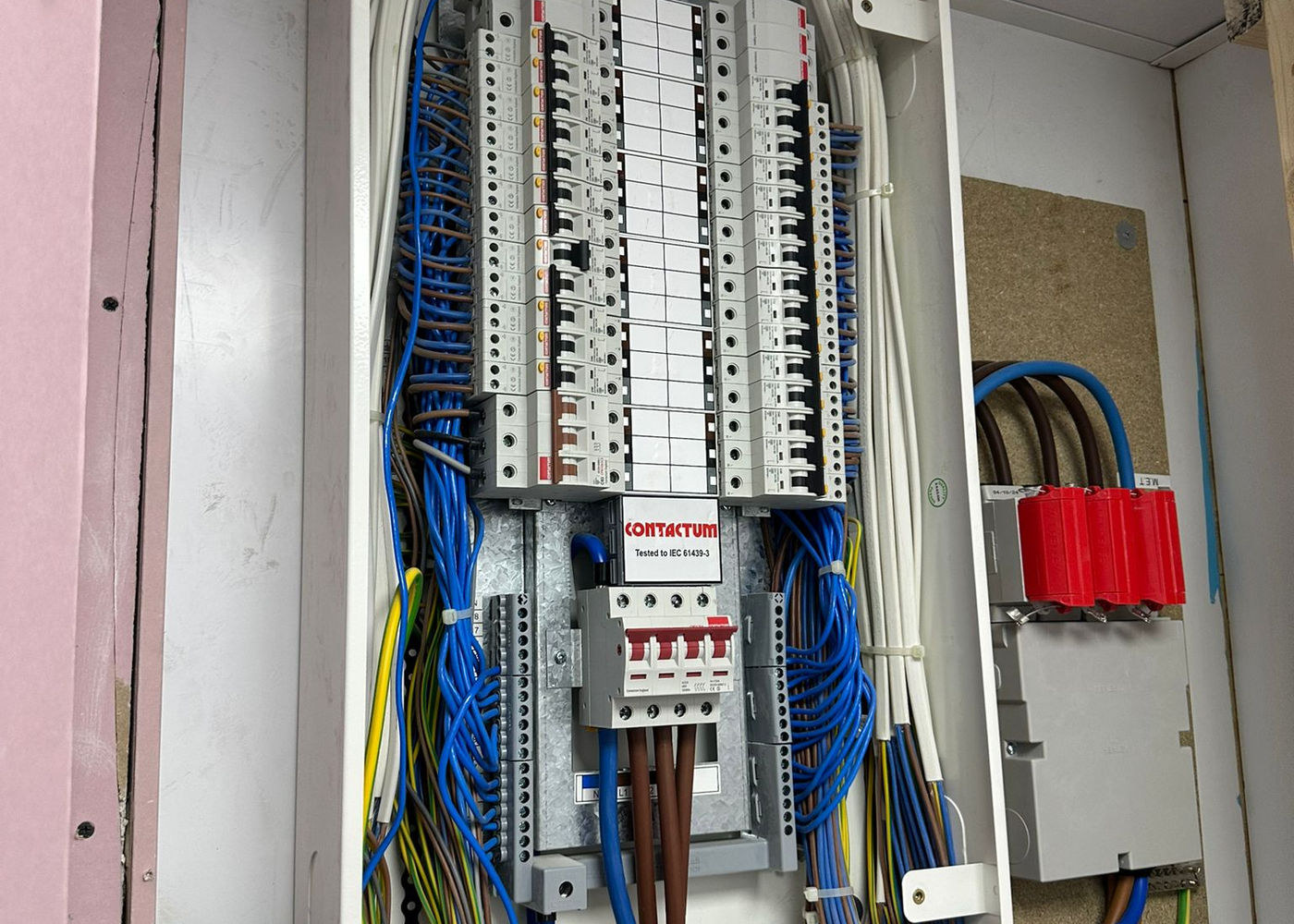
Split and halve. The installation is divided circuit by circuit and each part tested in turn until only the faulty section is left. It is slower than swapping parts and hoping, and it arrives at the actual cause rather than an expensive coincidence.
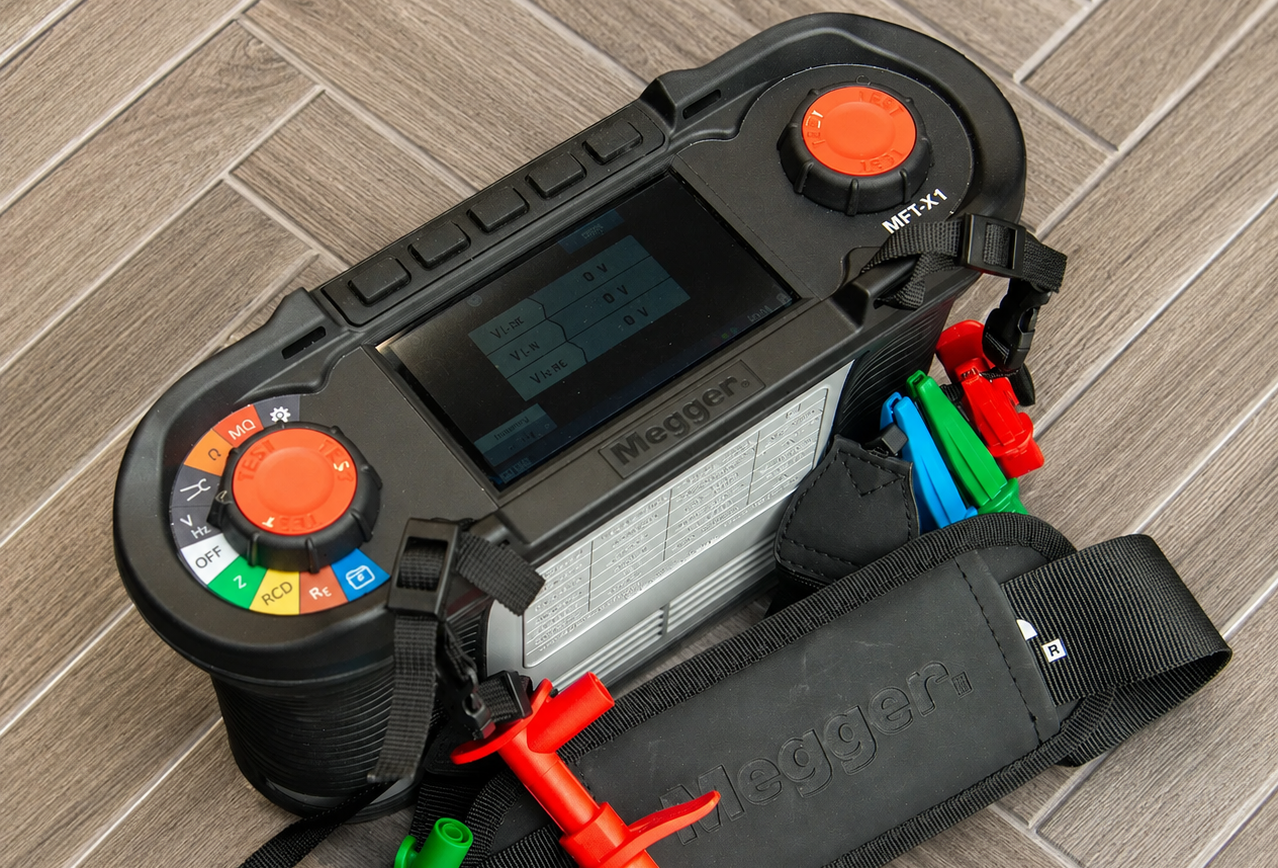
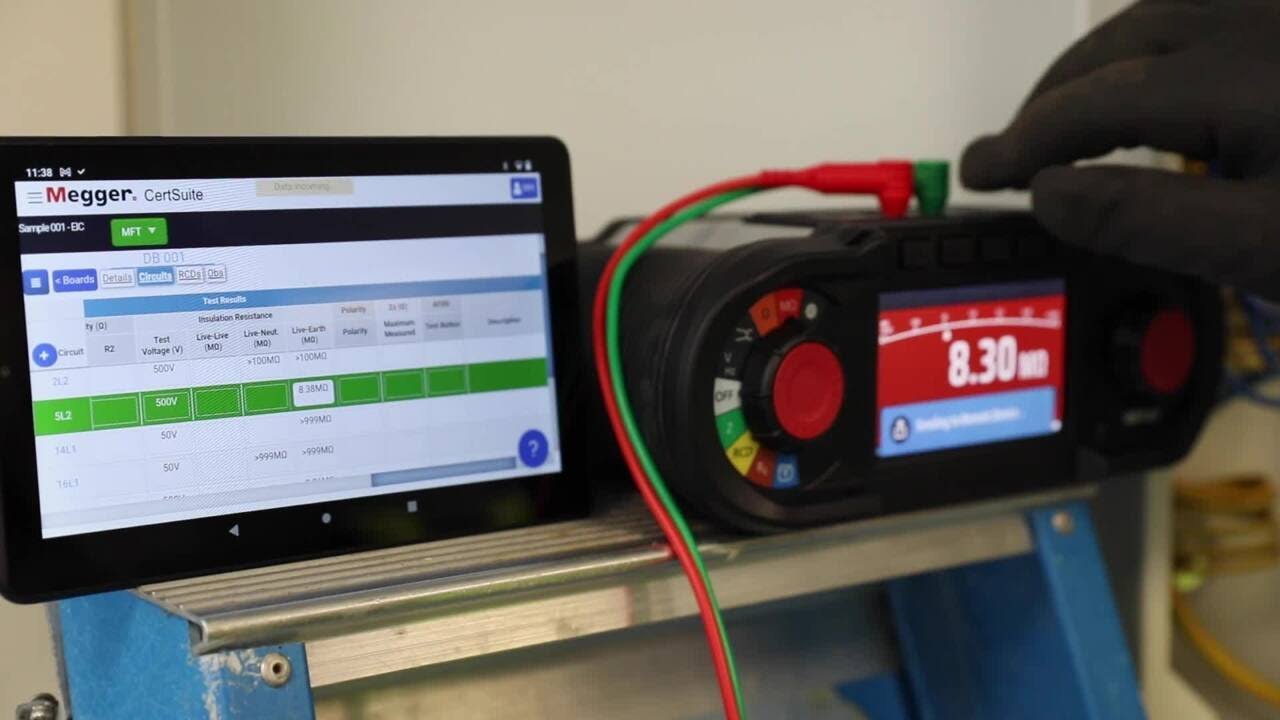
Four measurements do most of the work. Insulation resistance shows where a conductor is leaking to earth. Continuity confirms protective conductors are intact end to end. Earth fault loop impedance proves a circuit will disconnect quickly enough under fault. RCD ramp and trip timing show whether the protective device itself still does its job.
Taken properly, those four will locate the overwhelming majority of domestic faults without a single cable being chased out of a wall.
Faults we find most often
- A leaking heating element in a shower or immersion heater. The classic fault that only appears under load and disappears the moment you stop using it.
- Water in an outside socket, garden light or shed supply, which is why so many of these calls arrive during the first serious rain of the autumn.
- A nail or screw through a cable, usually months after the shelf went up, once damp has finally bridged the damage.
- A failed appliance rather than a failed circuit. A washing machine or fridge with a breaking-down element trips the board and looks exactly like a wiring fault.
- Deteriorated rubber or lead-sheathed cable in installations from the 1960s and earlier, where the insulation has simply aged out.
- A borrowed neutral in a lighting circuit. Common in much-altered houses, invisible until an RCD is fitted, and baffling if you have not met one before.
What happens once we have found it
Most faults are repaired on the same visit. The van carries the common failure items, so a damaged accessory, a failed breaker or a section of cable is dealt with there and then.
Where a part has to be ordered or the repair needs daylight, the circuit is made safe and left in a known state, the rest of the installation is put back into service, and you are told exactly what is outstanding and what it will cost to finish.
Either way the work is tested before the circuit is re-energised, and you are issued with certification to BS 7671. Nothing goes back on the assumption that it is probably fine now.