Start with how many lights are flickering
This one question does most of the diagnostic work before anyone even picks up a screwdriver. One light on its own points to something local: the bulb, the fitting, or the switch feeding it. Several lights on the same circuit points to that circuit. A shared connection or a dimmer issue further back. Every light in the house, together, points further back still. The consumer unit, the meter tails, or occasionally the incoming supply.
The most common causes
- A loose or failing bulb. Especially with LEDs and older bayonet fittings, a bulb that isn't fully seated can flicker intermittently. Worth ruling out first: it's the cheapest possible fix.
- LED and dimmer incompatibility. Many older dimmer switches were designed for the different electrical characteristics of halogen or incandescent bulbs and don't play well with LEDs, causing a flicker that's a mismatch rather than a fault.
- A loose connection at the switch or fitting. Wires that have worked loose over time make intermittent contact, and every time contact breaks and remakes, the light flickers.
- Voltage fluctuation from a large appliance starting up. A brief dim when a fridge, washing machine or immersion heater switches on is usually normal. Those appliances draw a surge of current at start-up that briefly affects voltage elsewhere on the same supply.
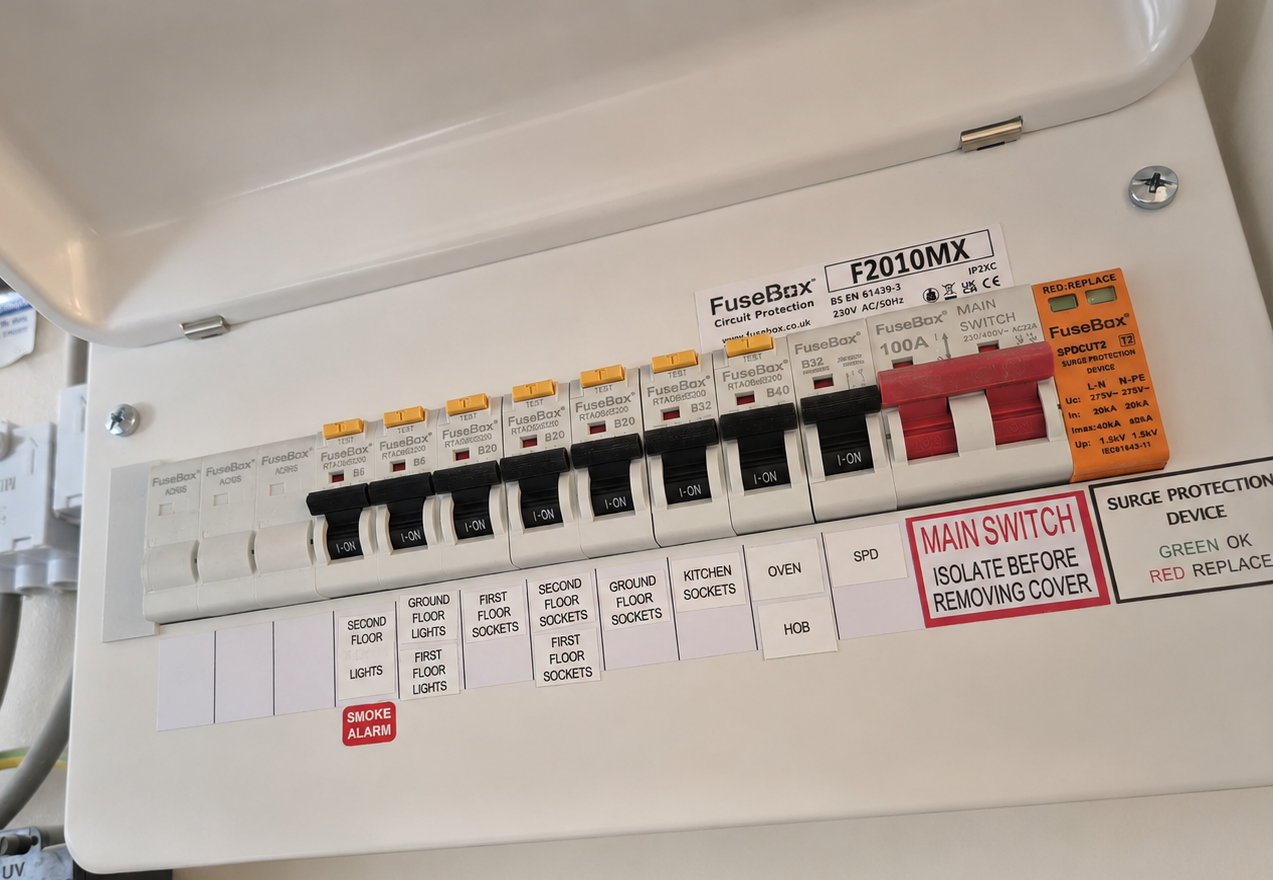
- A failing connection further back. Loose meter tails or a deteriorating connection at the consumer unit can cause whole-house flicker, and this is the version worth having checked properly rather than living with.
Quick checks before you call
- Swap the bulb for one you know works, if it's easy and safe to do. Rules out the cheapest cause first.
- If it's on a dimmer, check whether the bulb is LED-compatible and rated for use with a dimmer. Not all are, and the box will usually say.
- Note whether it's one light, several, or the whole house, and whether it happens randomly or only when something specific switches on.
- If flicking the switch on and off, or gently wiggling it, changes the flicker, that points strongly to a loose connection at the switch itself.
When it's more than a nuisance
- The flicker comes with a buzzing sound, warmth, or a smell at the switch or fitting.
- It's been getting more frequent or more pronounced over recent weeks.
- It affects the whole house, not just one room or fitting.
- It started suddenly, with no bulb change or new dimmer to explain it.
Any of those, it's worth having checked rather than tolerated. The same intermittent contact that causes flicker also generates heat every time it arcs.
How we track it down
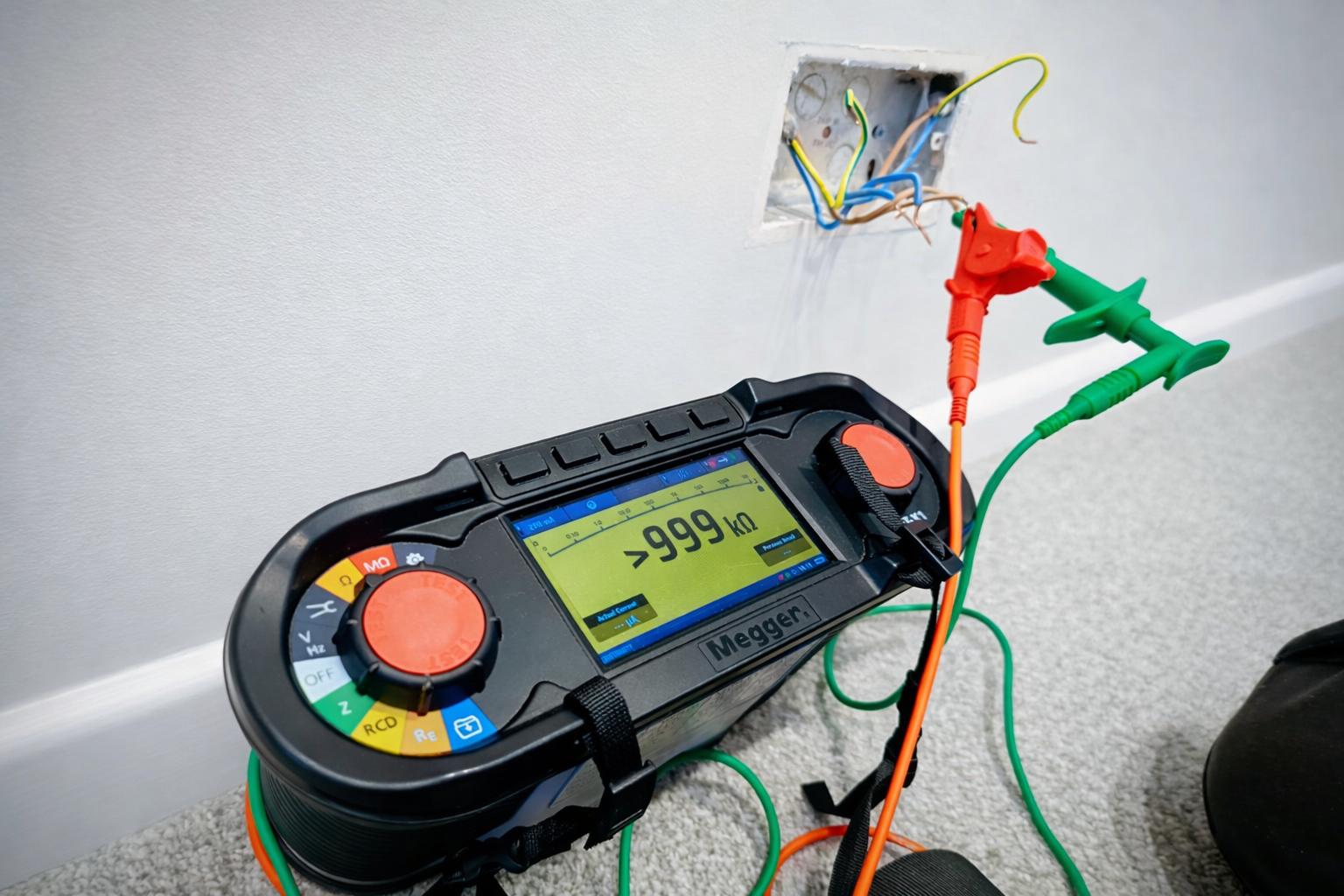
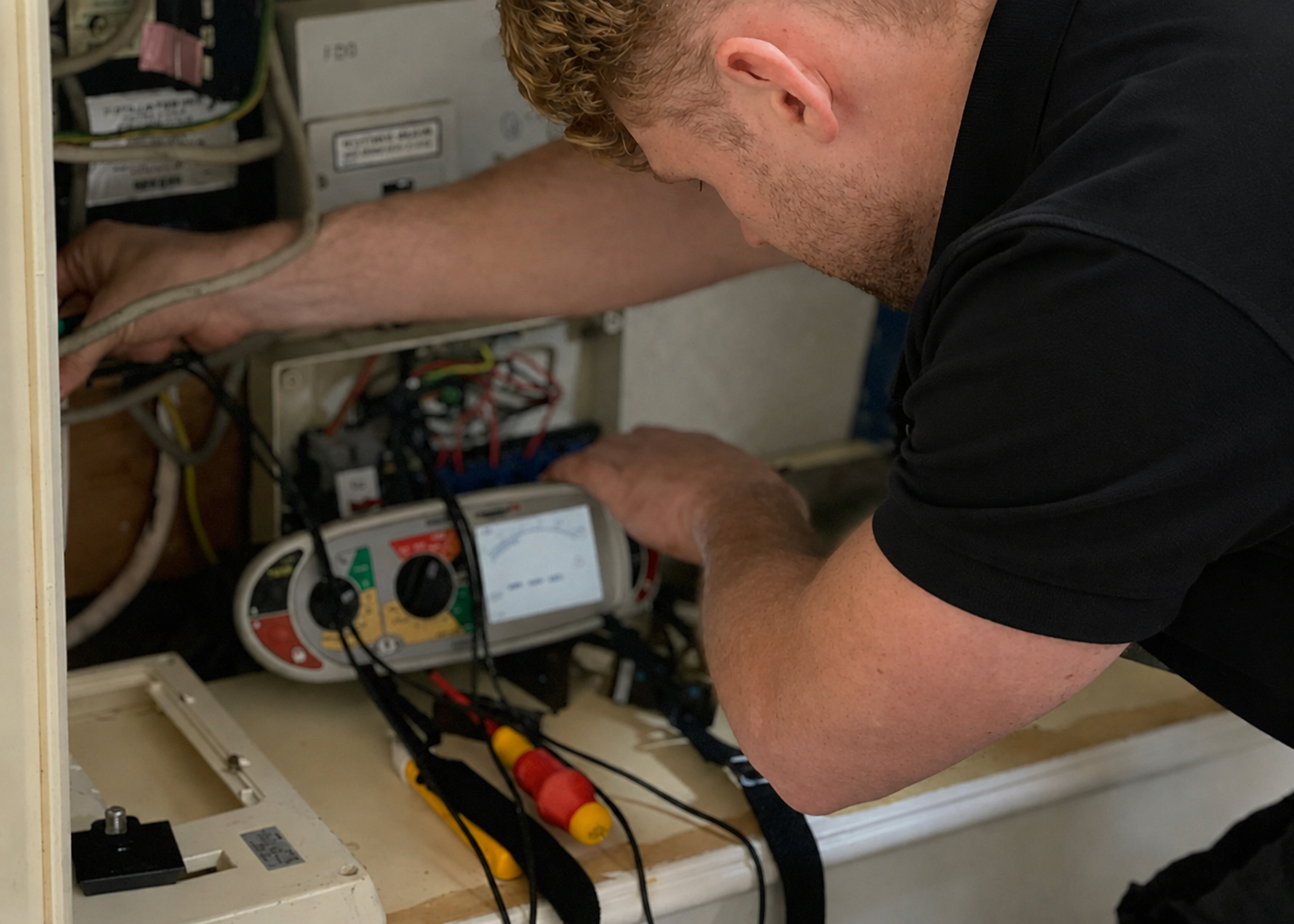
We start where your own observations point. A single fitting, a circuit, or the whole property. And test connections and continuity along that path rather than replacing parts speculatively. Ceiling rose and switch connections are checked and re-terminated where they've worked loose; where the cause is a dimmer genuinely incompatible with modern LEDs, we can advise or fit a trailing-edge dimmer built for the job. Anything further back, at the consumer unit or meter tails, is tested properly and certified to BS 7671 once resolved.
Common Questions
Why do my lights dim when the kettle or washing machine switches on?
A brief, small dip when a heavy appliance starts up is usually just voltage sag. Normal in most homes and nothing to worry about on its own. If the dip is dramatic, happens with small appliances too, or is getting more noticeable over time, it can point to a loose connection somewhere upstream, including at the meter tails or the supplier's own connection, and is worth mentioning when you call.
Is LED flicker dangerous?
Usually not. It's most often a compatibility issue between the bulb and an old dimmer switch, and it's annoying rather than unsafe. The exception is if the flicker started suddenly on a fitting that was previously fine, or comes with warmth, buzzing or a smell at the switch or fitting. That combination points to a wiring fault rather than a bulb mismatch.
Why does only one light flicker while the rest are fine?
A single fitting flickering on its own, while everything else is steady, points to something local. The bulb, the fitting, the switch, or the specific connection feeding that one light. It's the easiest version to diagnose because the problem is contained to one place rather than spread across a circuit.
Why do all the lights in the house flicker together?
When every light flickers at once, the cause is usually further back. A loose connection at the consumer unit, the meter tails, or occasionally the incoming supply itself. This is worth having checked properly rather than living with, because a connection carrying the whole property's current is a higher-consequence fault than one feeding a single fitting.
Can flickering lights start an electrical fire?
Flickering caused by a cheap bulb, no. Flickering caused by a loose or arcing connection, potentially yes. The same intermittent contact that makes a light flicker also generates heat each time it arcs. That's why persistent flickering that isn't explained by the bulb or dimmer is worth having checked rather than tolerated.