Right now, in this order
- If you see flames or active smoke, get everyone out and call 999. Don't stop to switch anything off. That's a fire, not an electrical fault, and it's the fire service's job first.
- If there's no flame or smoke, but you can smell burning, find the source if you can do so safely. Touch nothing that's hot. Follow the smell to a socket, switch, appliance, or the consumer unit.
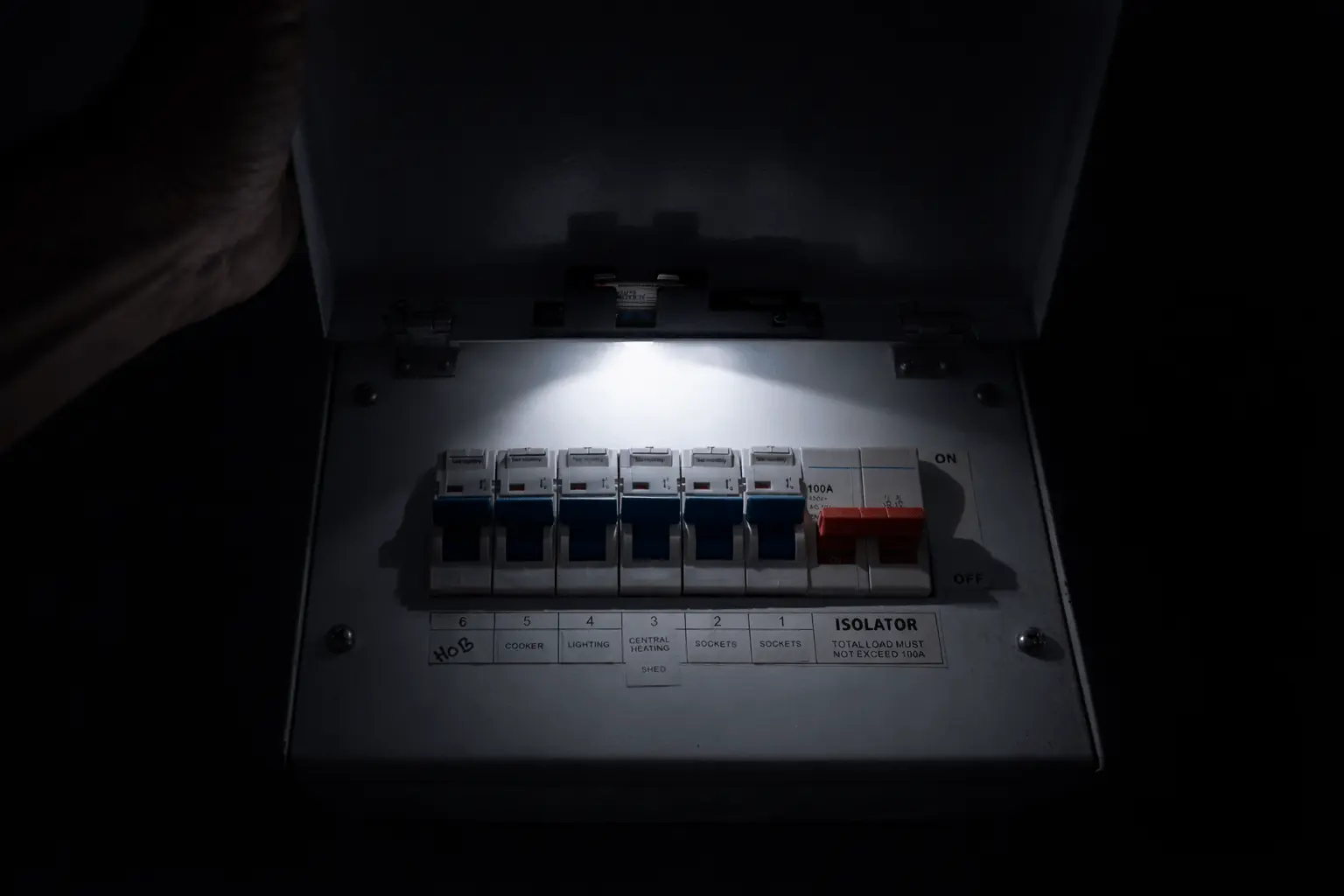
- Switch off that specific circuit at the consumer unit if you can identify it, or the main switch if you can't. Unplug the appliance if that's the source.
- Don't switch it back on to check. Leave it off and call us, or call an electrician who can attend immediately.
- Ventilate the room if it's safe to do so, open a window. Melting plastic and overheating components release fumes worth not breathing more of than necessary.
What's actually causing it
- A loose connection. The single most common cause. A terminal that's worked loose over time has higher resistance, generates heat under load, and the heat is what you're smelling. Often before anything is visibly damaged.
- An overloaded socket or extension lead. Too much current through a connector not rated for it heats the plastic housing, which is what produces that distinctive hot-plastic smell.
- A failing appliance. A motor, heating element or internal wiring breaking down inside a washing machine, tumble dryer, heater or older appliance.
- Dust or debris in a fitting. Extractor fans and downlights that have accumulated dust or insulation can overheat around the trapped material.
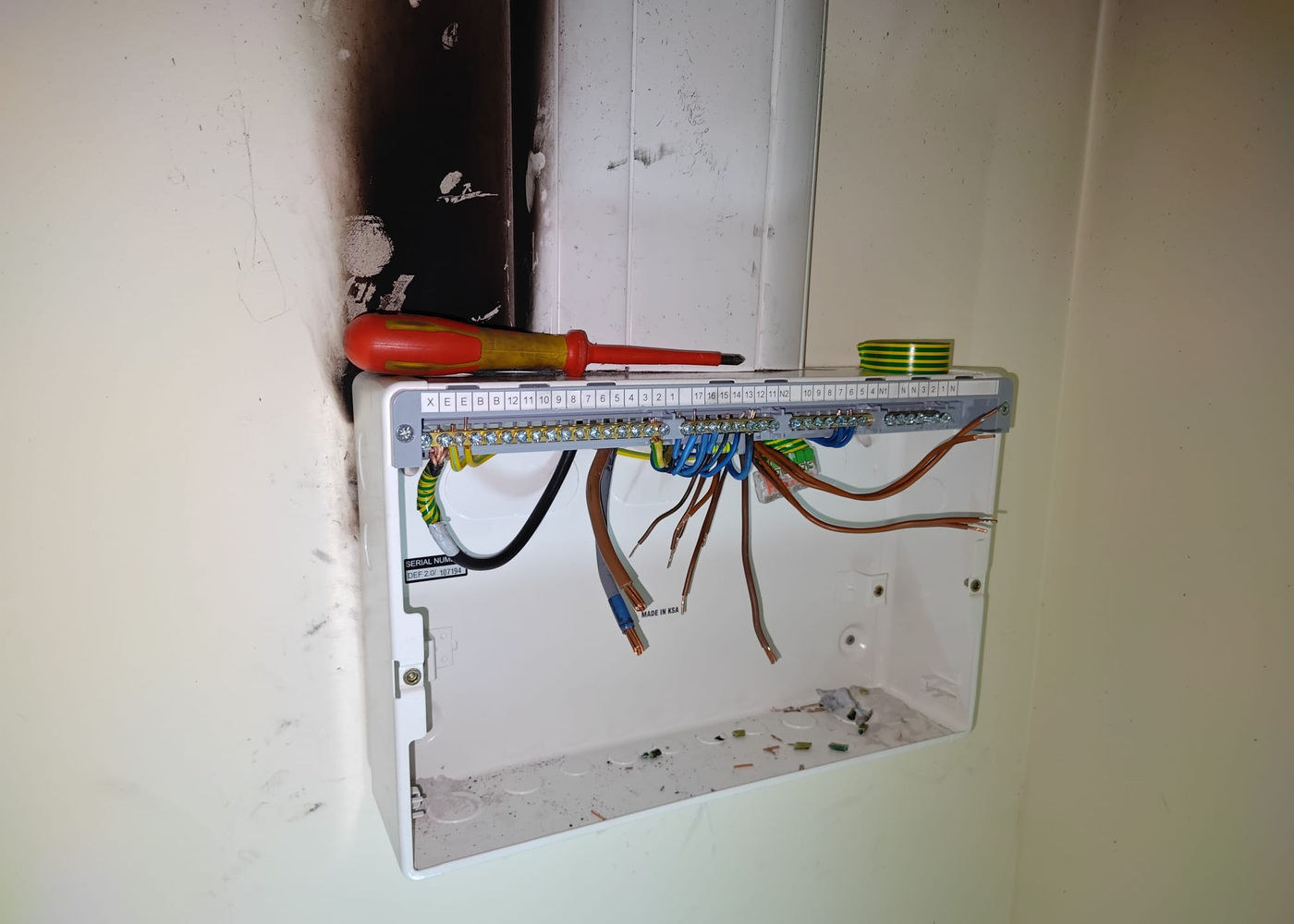
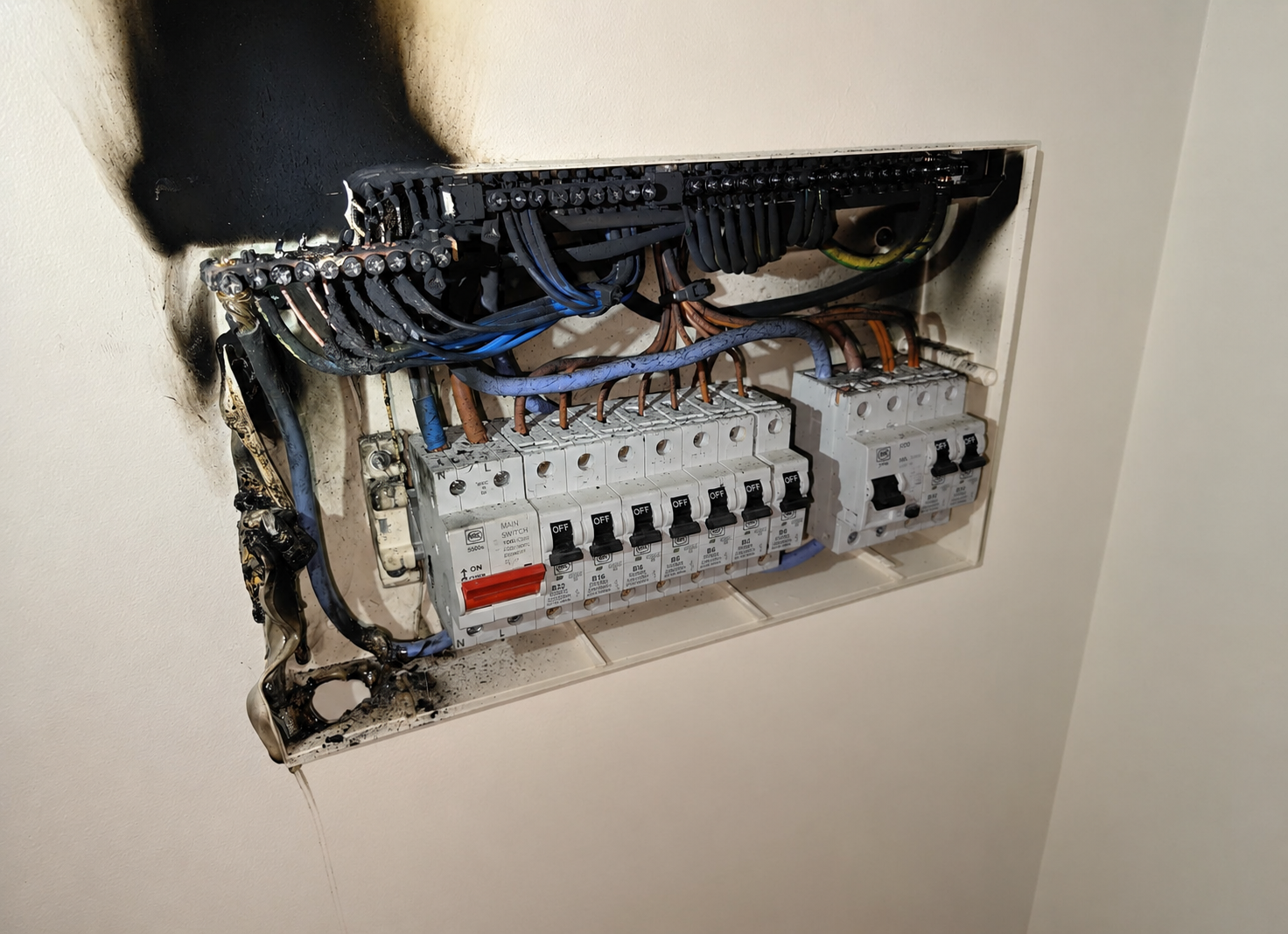
- A fault inside the consumer unit. A loose main connection, a failing breaker, or age-related deterioration inside the board itself. This is one of the more serious versions. The board carries the full current for the property.
Signs to look for once it's safe
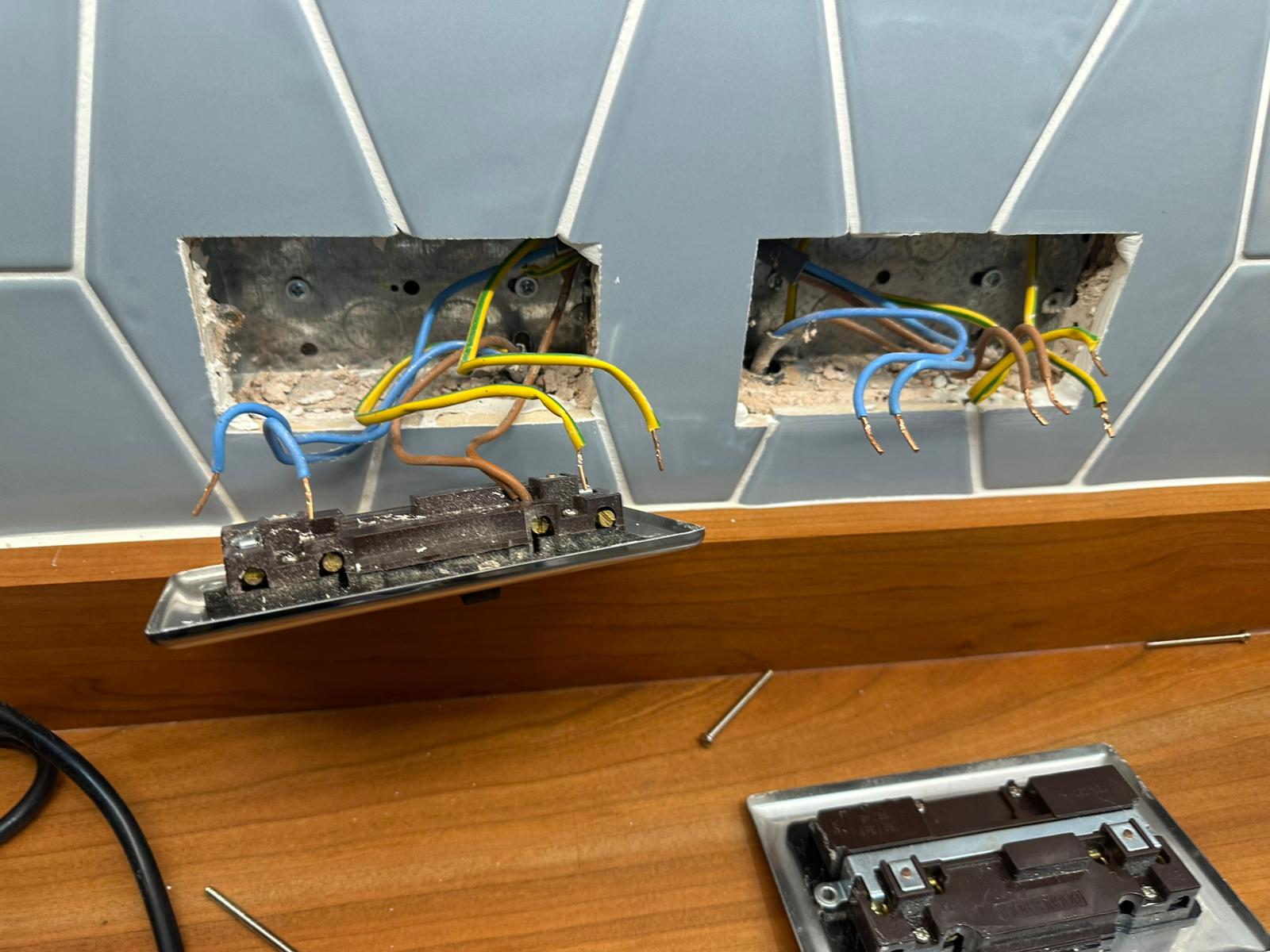
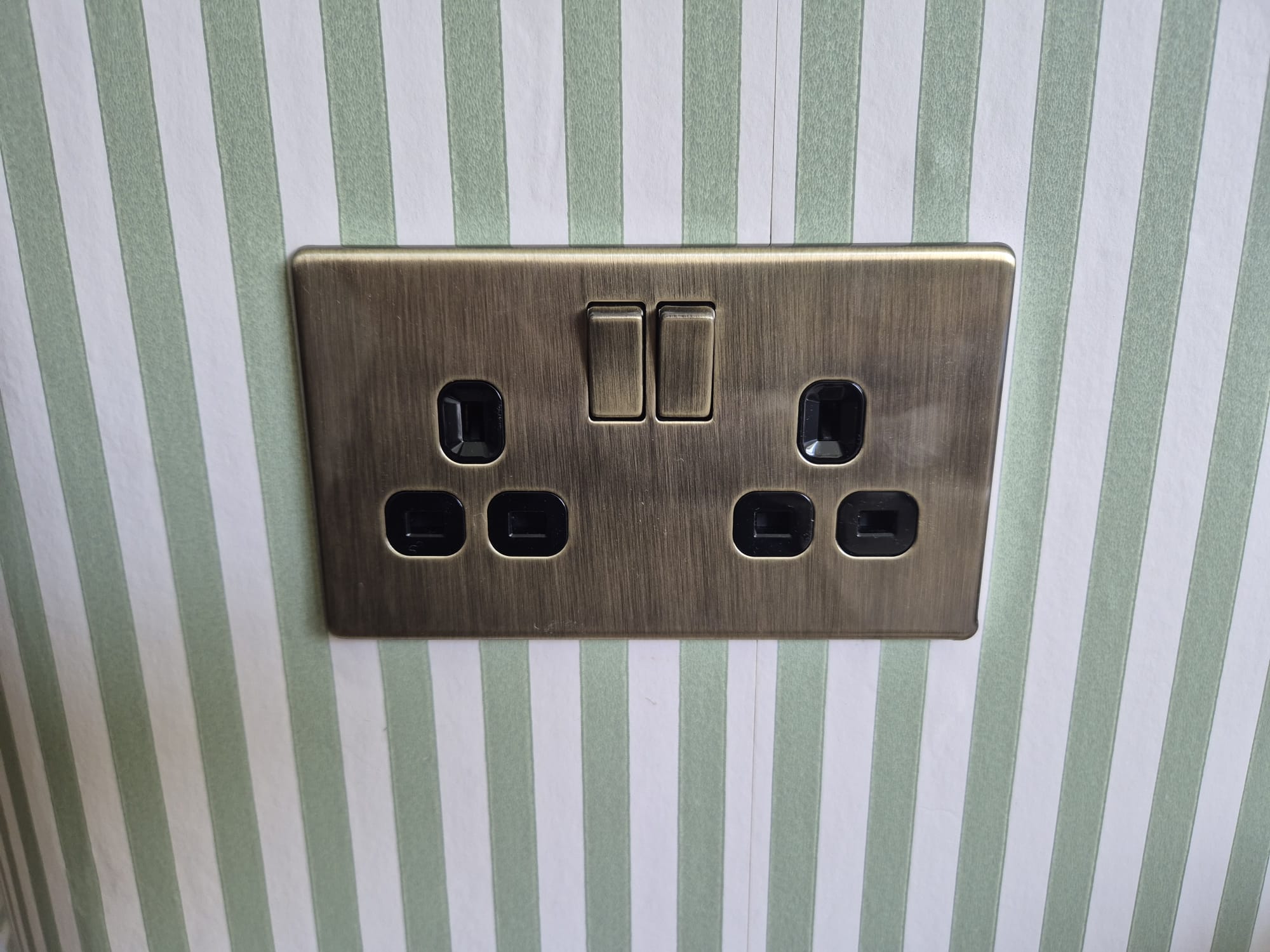
- Scorch marks or brown discolouration around a socket, switch faceplate, or plug.
- A faceplate that's warped, cracked, or feels soft to the touch.
- A plug that feels warmer than the appliance it's connected to would explain.
- Visible melting on a plug, socket, or cable insulation.
- A persistent smell that returns even after you've unplugged everything obvious.
None of these are things to photograph and monitor. Any of them means the fitting or circuit needs to be isolated and checked.
What we do when we arrive
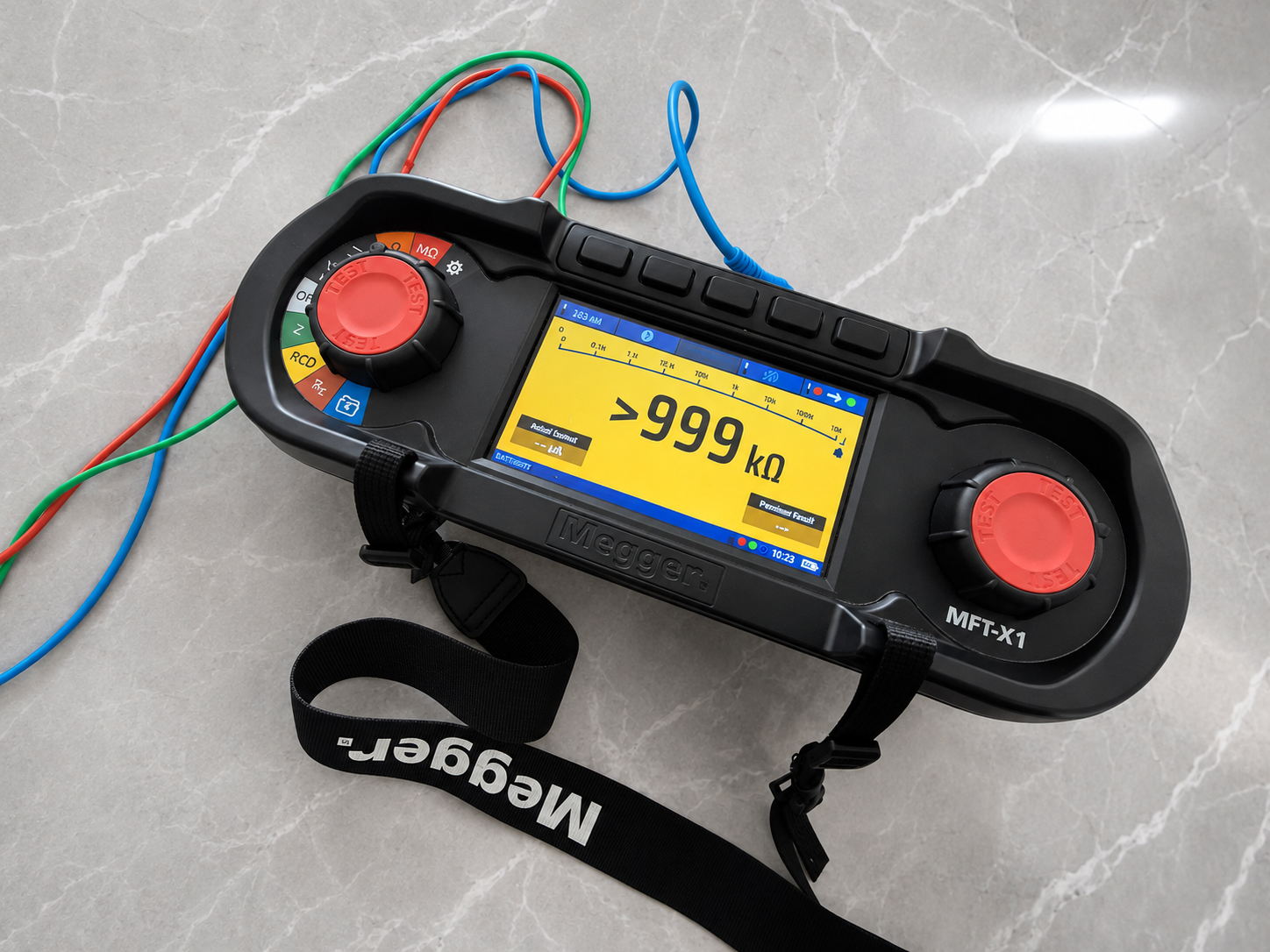
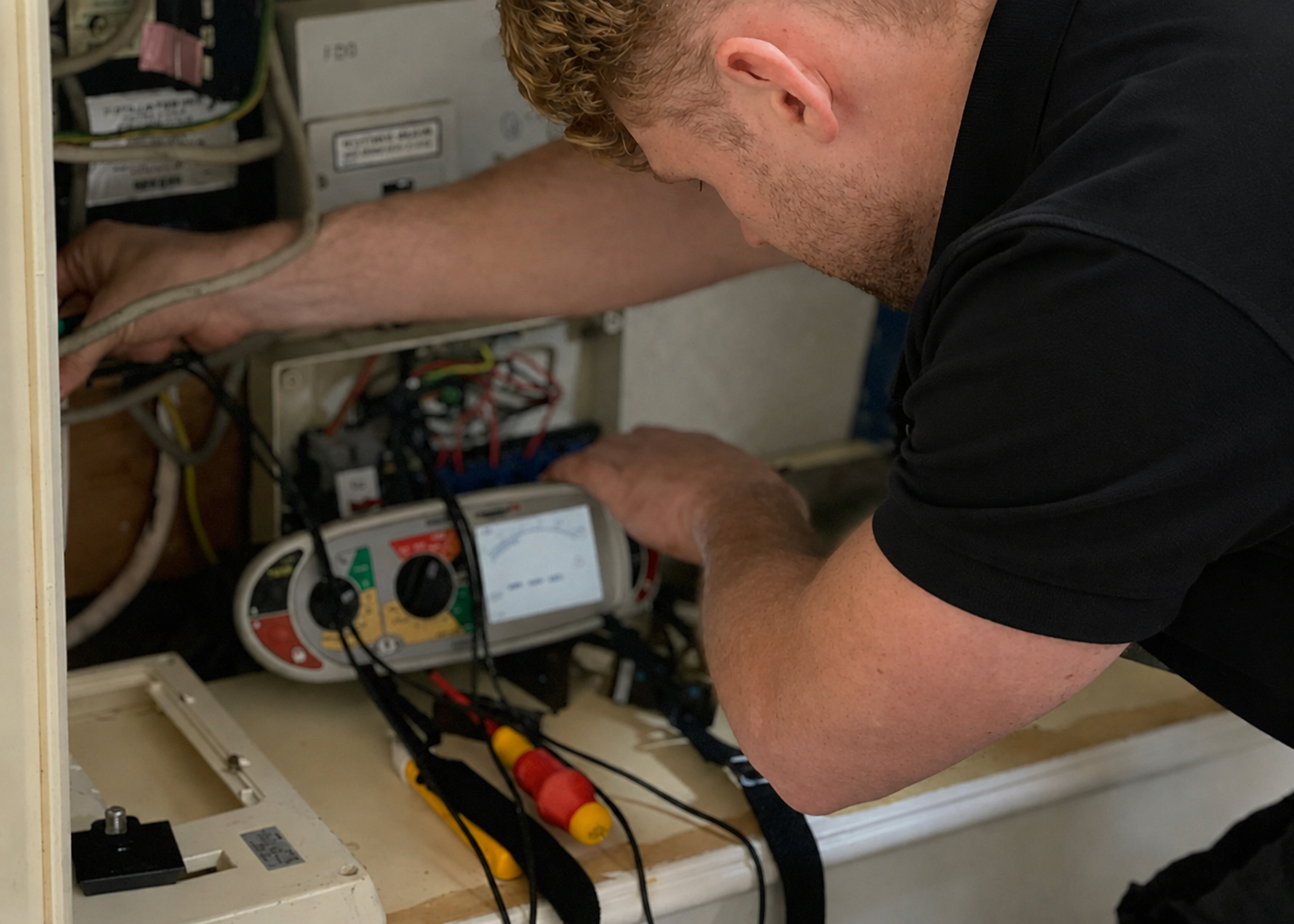
We isolate the affected circuit safely before touching anything, then inspect for physical signs of heat damage. Discolouration, melting, or scorching. At every accessory on that circuit. Thermal signs don't always announce themselves at the exact point of failure, so we test connections and insulation resistance along the whole run rather than assuming the smell tells us precisely where to look.
Anything found damaged is replaced, not just reconnected. A terminal that's overheated once has already begun to fail and reconnecting it without addressing the cause invites a repeat. Once repaired, the circuit is tested and certified to BS 7671 before it goes back into service.
Common Questions
Should I call the fire service or an electrician first?
If you can see flames, active smoke, or the smell is strong and you can't immediately identify a safe source, call 999 first, always. If the smell is faint, isolated to one fitting, and there's no visible smoke or heat, switching that circuit off and calling an electrician is the right first step.
Is it safe to keep using the rest of the house?
If you've isolated the specific circuit or appliance and the smell has stopped, the rest of the property is generally fine to use normally. If you can't identify the source, or the smell persists after isolating a circuit, treat the whole property with caution until it's been checked.
A new appliance smells odd when I first use it. Is that normal?
A faint, brief smell from a genuinely new heating appliance (an oven, heater or iron) burning off manufacturing residue is common and usually harmless. It should fade within a few minutes of first use and not recur. If it doesn't fade, or comes from something that isn't brand new, treat it as a fault.
Can a burning smell come and go?
Yes, and that's often more concerning, not less. A loose connection can heat up under load, cool down when the appliance switches off, and repeat the cycle. Intermittent doesn't mean minor. It usually means a connection is failing gradually and getting worse.
What does a burning smell near the consumer unit specifically mean?
This is one of the more serious versions. It can mean a loose main connection, an overloaded main switch, or a failing device inside the board itself, all of which carry the full current for the property. Switch off at the main switch if you can do so safely, and call immediately. Don't wait to see if it happens again.