Why noise means something's wrong
A properly connected electrical fitting is silent, or close to it. A buzz, hum or crackle is the sound of electricity arcing across a gap it shouldn't have to. Usually a connection that's worked loose enough to have a tiny air gap, but not loose enough to have failed completely yet. Every time current jumps that gap, it makes noise and generates heat. That combination, sound plus heat, is exactly the pattern that precedes more serious failures.
What kind of noise, and what it suggests
- A loud, sharp buzz that's new. A connection that has recently started arcing. Treat as urgent.
- A buzz that gets louder under load, when more of the house is switched on. A marginal connection carrying more current than it can handle cleanly.
- A crackling or popping sound rather than a steady hum. Often more serious, suggesting intermittent arcing rather than a constant marginal connection.
- A very faint, constant hum that's always been there and hasn't changed. Can be low-level electromagnetic noise from certain devices, and is lower priority, though still worth mentioning if you're ever having other work done.
Common causes
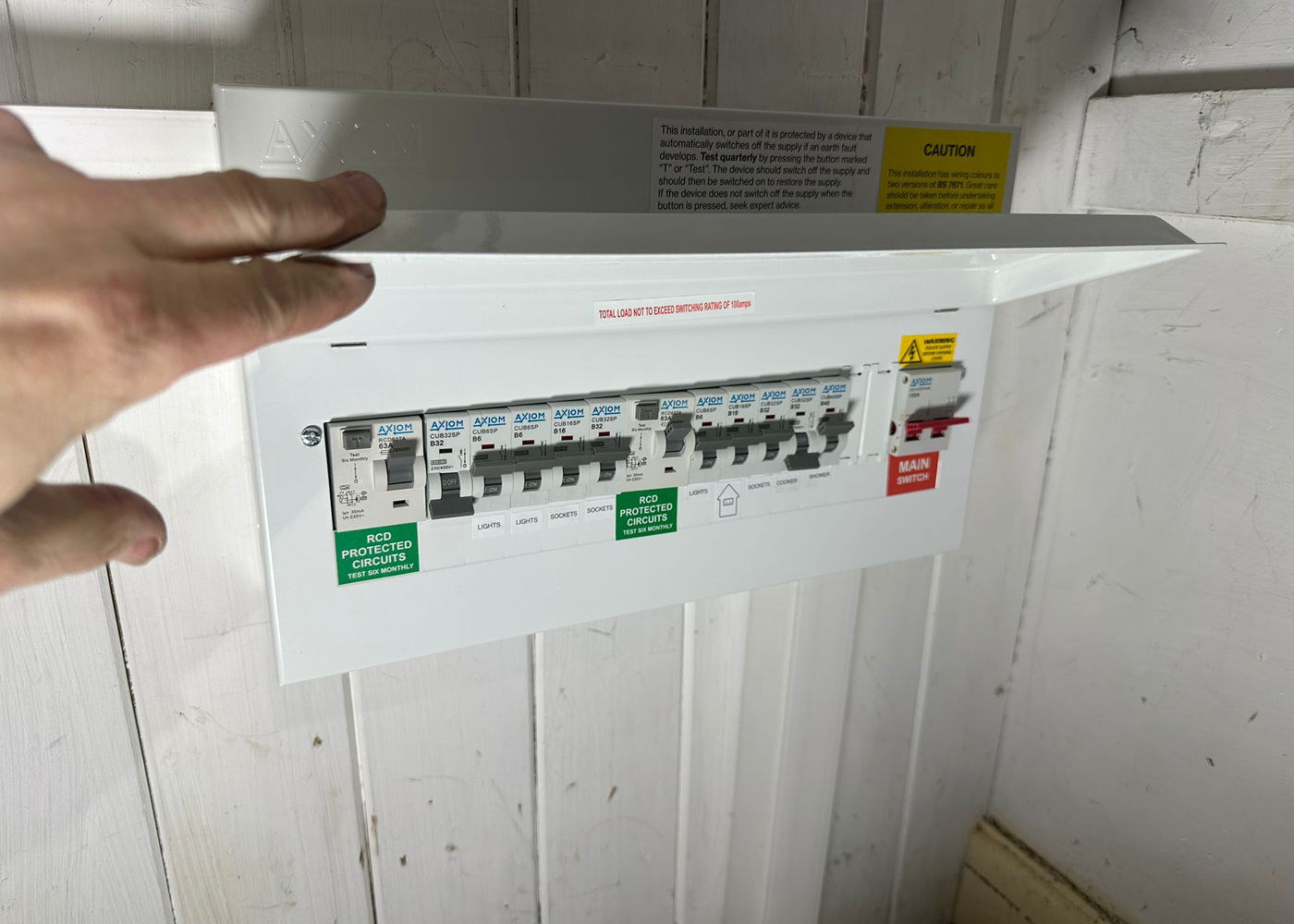
- Loose main tails or a loose main switch connection. These carry the full current for the property and are one of the more serious sources. The consequence of a fault here is proportionally bigger.
- A loose connection on an individual breaker. Localises the buzz to one part of the board and is usually a more contained repair.
- A failing or ageing RCD or breaker. Internal components can develop faults that produce noise before they fail outright.
- An overloaded circuit or connection running hotter than it should, with the increased current making a marginal connection buzz audibly.
What's safe to check yourself
Look, don't touch, and don't open the cover. Check whether the consumer unit or the wall around it feels warm, whether there's any smell, and whether the buzzing gets louder or quieter with specific appliances running. That information is genuinely useful when you call. Opening a live consumer unit and working inside it is not a DIY task under any circumstances; that's precisely the kind of job that needs someone qualified, insured, and working with the correct isolation procedure.
What we do about it
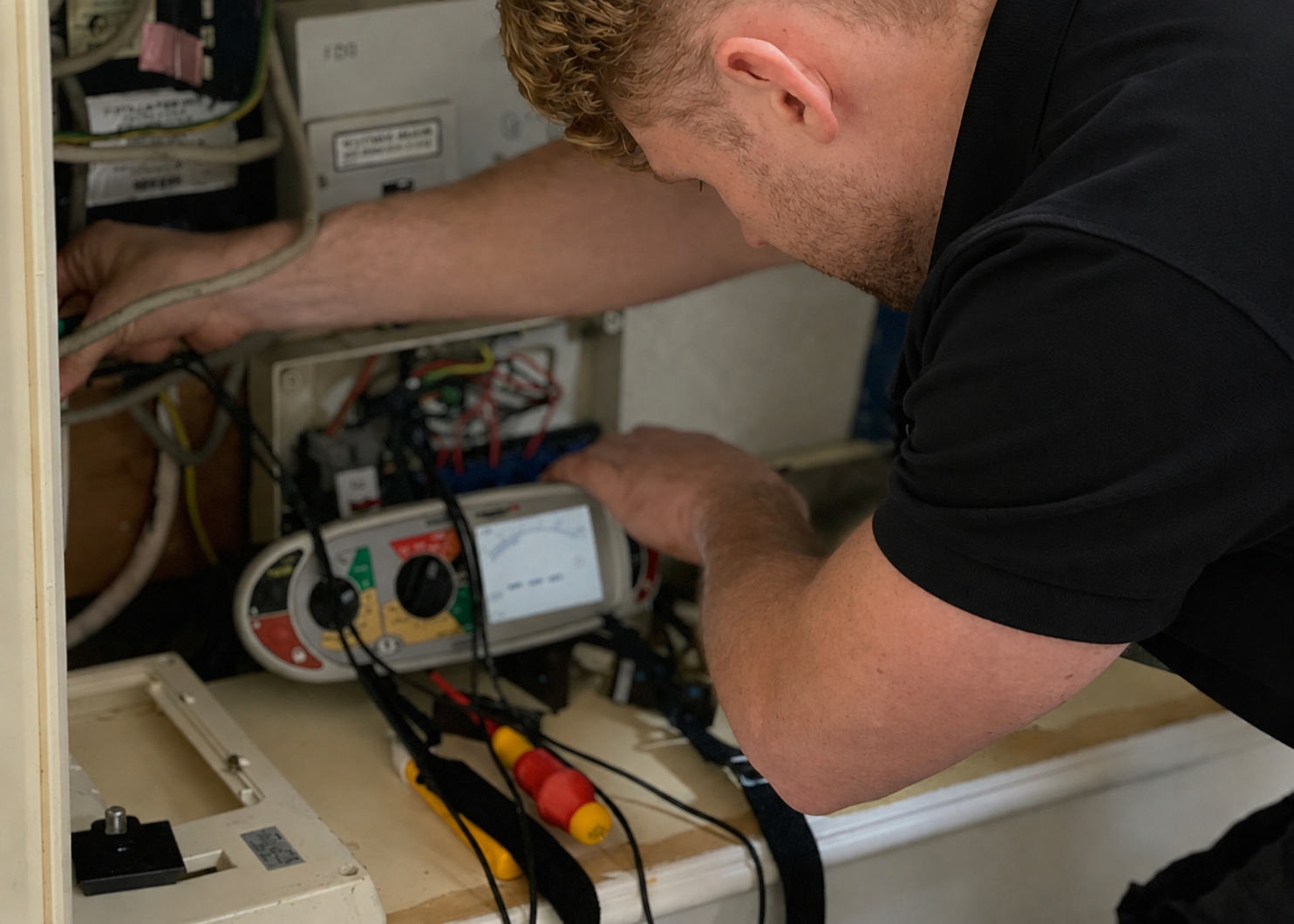
We isolate safely, then inspect and torque-test terminals throughout the board. Main tails, busbar connections, and individual breaker terminals. Because a buzz you can hear from one point can originate somewhere else entirely along the same conductor. Anything found loose is re-terminated correctly; anything showing heat damage or pitting is replaced rather than reused. Where the buzz points to a genuinely failing or end-of-life board rather than one fixable connection, we'll tell you that plainly rather than patch around it.
Common Questions
Is a very faint hum from a consumer unit normal?
A very faint, constant, unchanging hum that you have to put your ear close to hear can be normal transformer or electromagnetic noise from some modern devices. If you have to strain to hear it, it hasn't changed in ages, and there's no heat or smell with it, it's low priority. Anything louder, new, or getting worse is not.
The buzzing gets louder when I use a certain appliance. What does that mean?
That's a useful clue, not a coincidence. It suggests the buzzing connection is on, or feeds, that specific circuit, and the higher current draw of that appliance is making a marginal connection work harder and buzz more. Mention exactly which appliance when you call.
Can a buzzing consumer unit actually catch fire?
A buzzing or arcing connection generates heat at the point of the fault every time it happens. Consumer units are built with fire-resistant enclosures precisely because this is a known risk, but that enclosure is a safeguard, not a reason to ignore the cause. A persistent buzz is worth treating as a developing fault, not background noise.
Is it safe to open the consumer unit and look myself?
You can safely look at the outside. Check for warmth, discolouration, or a smell without touching anything or removing the cover. Opening the cover and working inside a live consumer unit is not something to do yourself; that's exactly the kind of task that needs someone qualified and insured for it.
Does buzzing always mean the whole board needs replacing?
No. Most buzzing consumer units have one identifiable loose connection or one failing device, and that gets repaired or replaced on its own. A full board replacement is only the right answer if the board itself is old, damaged, or has multiple unrelated issues. We'll always explain which situation you're actually in.