Overload or short circuit: the two real causes
An MCB (miniature circuit breaker) trips for one of two reasons, and they need different answers. An overload means the circuit is being asked to carry more current than its cable and breaker are rated for. Too many appliances drawing power at once. A short circuit means live and neutral (or live and earth) have made contact somewhere they shouldn't. A fault, not a demand problem. And the breaker trips almost instantly to prevent the cable overheating.
The speed of the trip is the biggest clue. Slow, after a while running several appliances: overload. Instant, the moment you plug something in or switch the breaker back on: short circuit.
Common causes of each
- Too much on one extension lead. A kettle, heater and microwave sharing a single socket circuit is a classic overload. The circuit is doing exactly what it should, protecting the cable from overheating.
- A faulty appliance. An appliance with a damaged internal cable or a failing motor can short internally, tripping the breaker the instant it's switched on.
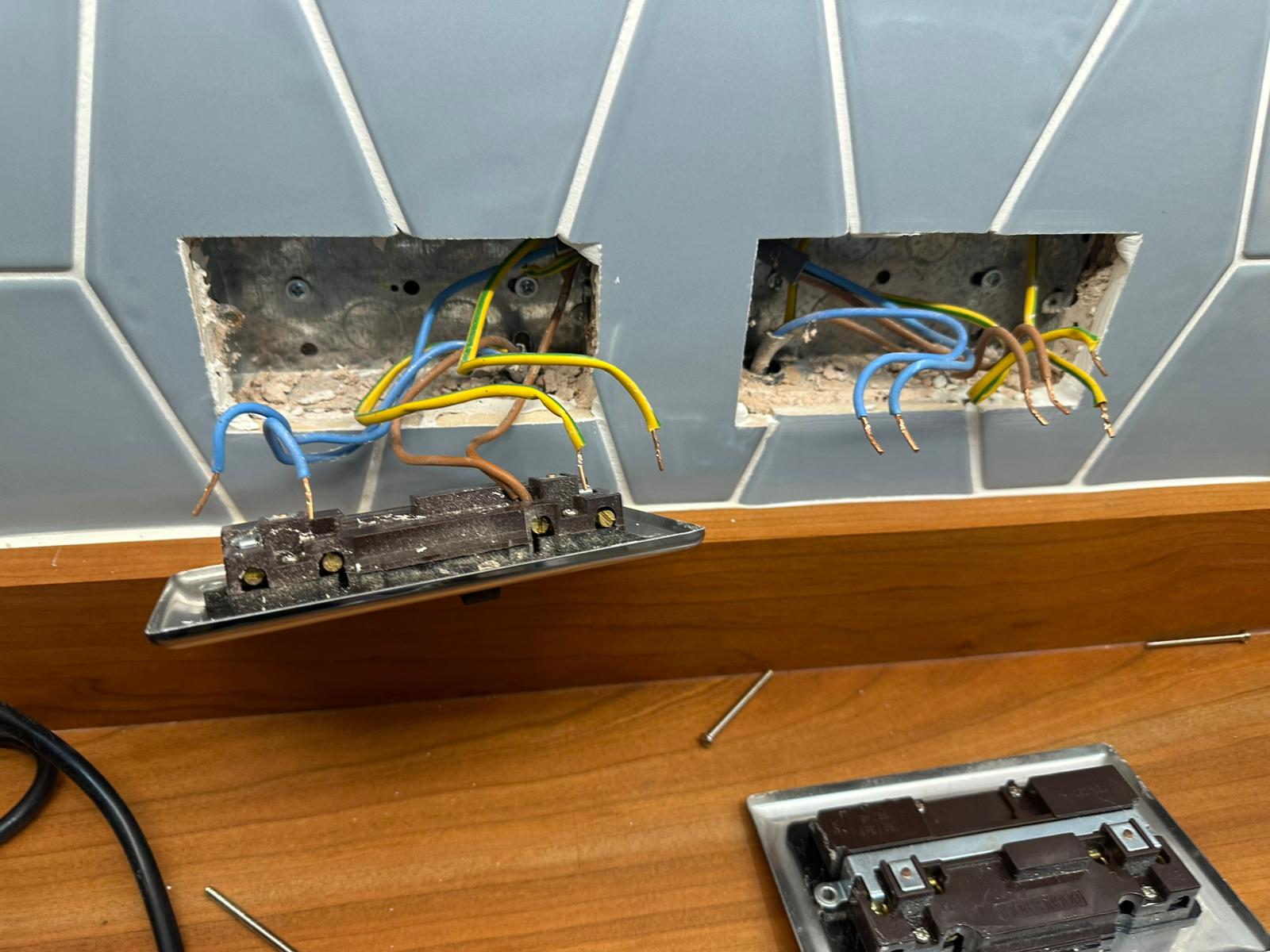
- Damaged wiring. A nail or screw through a cable, rodent damage in a loft, or a compressed cable behind a socket can create a direct short between conductors.
- A loose or failed connection. Terminals that have worked loose over time generate heat and can eventually arc, tripping the breaker intermittently before failing completely.
- An undersized breaker for a growing load. Circuits installed for a lighter era of appliance use can genuinely be undersized for a modern kitchen's demand. That's a load-balancing conversation, not a fault to chase.
Warning signs that mean stop and call now
- Any smell of burning, melting plastic, or scorch marks near the breaker, a socket, or a switch.
- The breaker, a socket faceplate, or a plug feels warm or hot.
- The breaker trips instantly and repeatedly with nothing plugged in.
- You can hear crackling, buzzing or popping from a socket or the consumer unit.
- The breaker won't reset at all, or resets and trips again within seconds.
Any of those, switch the circuit off at the consumer unit, leave it off, and call. Don't keep trying to reset it.
What's safe to check yourself
- Unplug everything on the affected circuit, then try resetting the breaker with nothing connected.
- If it holds, plug items back in one at a time until it trips again. That item, or that combination, is your overload.
- If it trips instantly with nothing plugged in, the fault is in the fixed wiring or a socket itself. Leave it off.
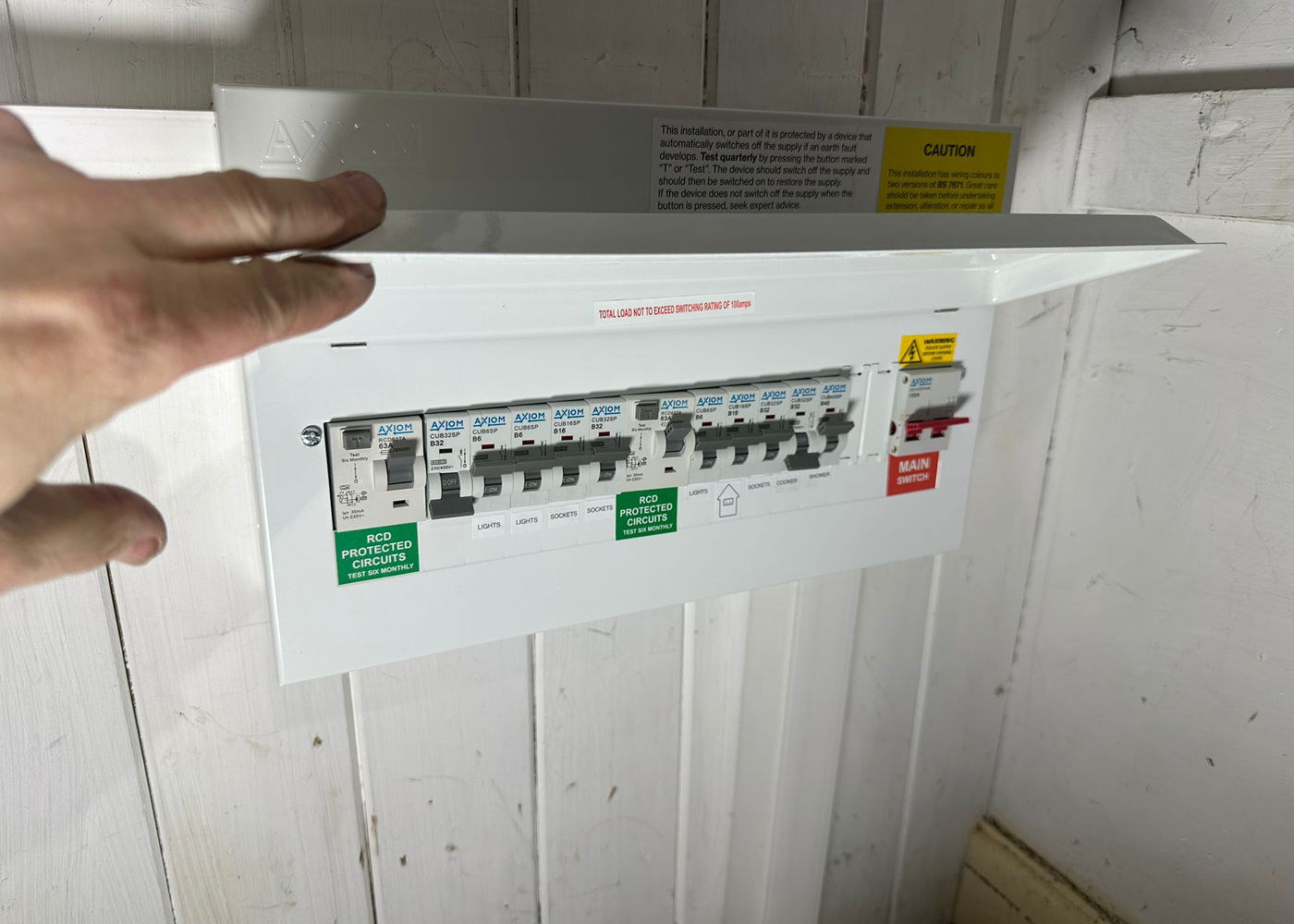
- Check whether the breaker's rating (printed on the switch, usually B6, B16 or B32) matches what you'd expect for that circuit. A lighting circuit on a 32A breaker, or vice versa, is worth mentioning when you call.
How we confirm which it is
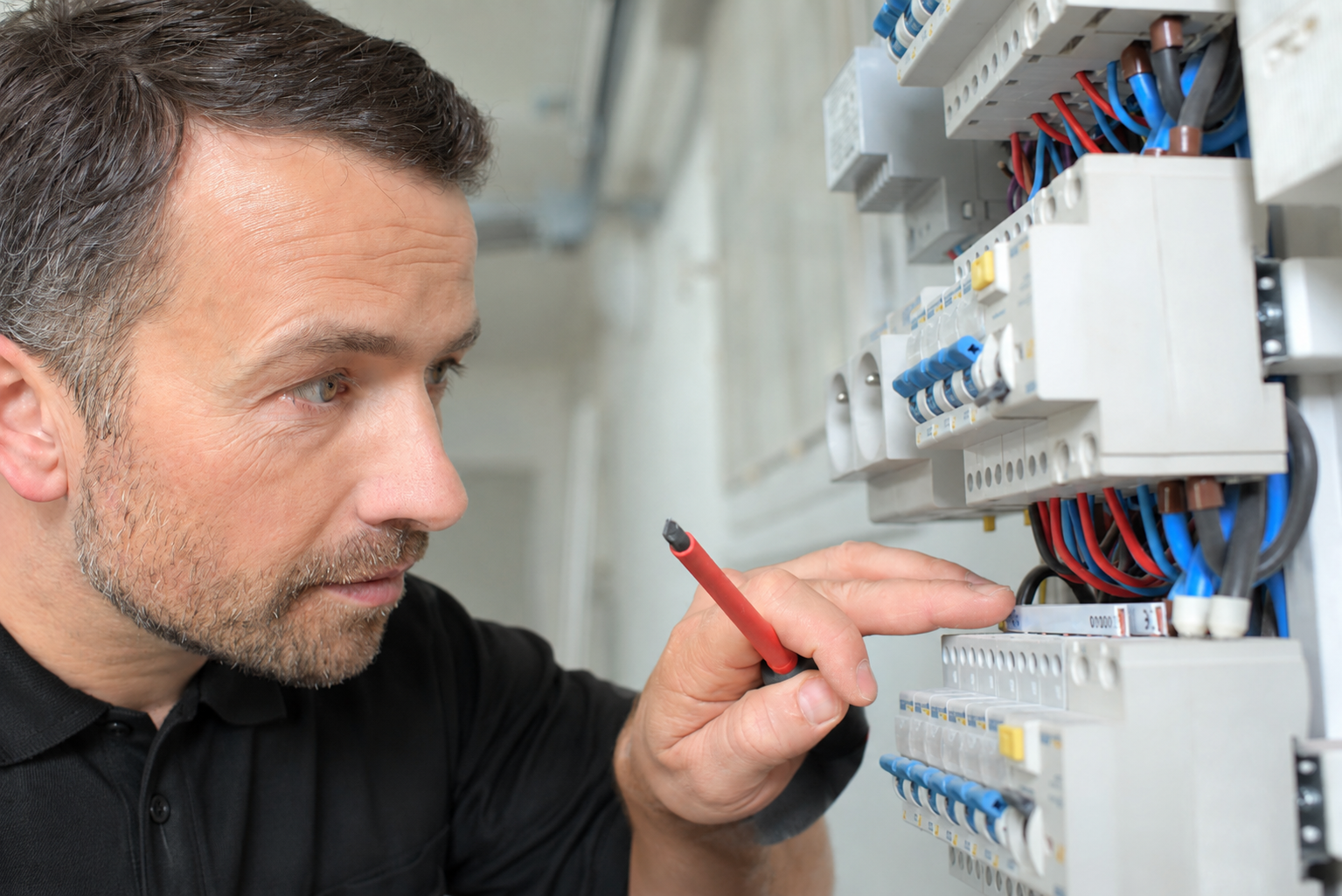
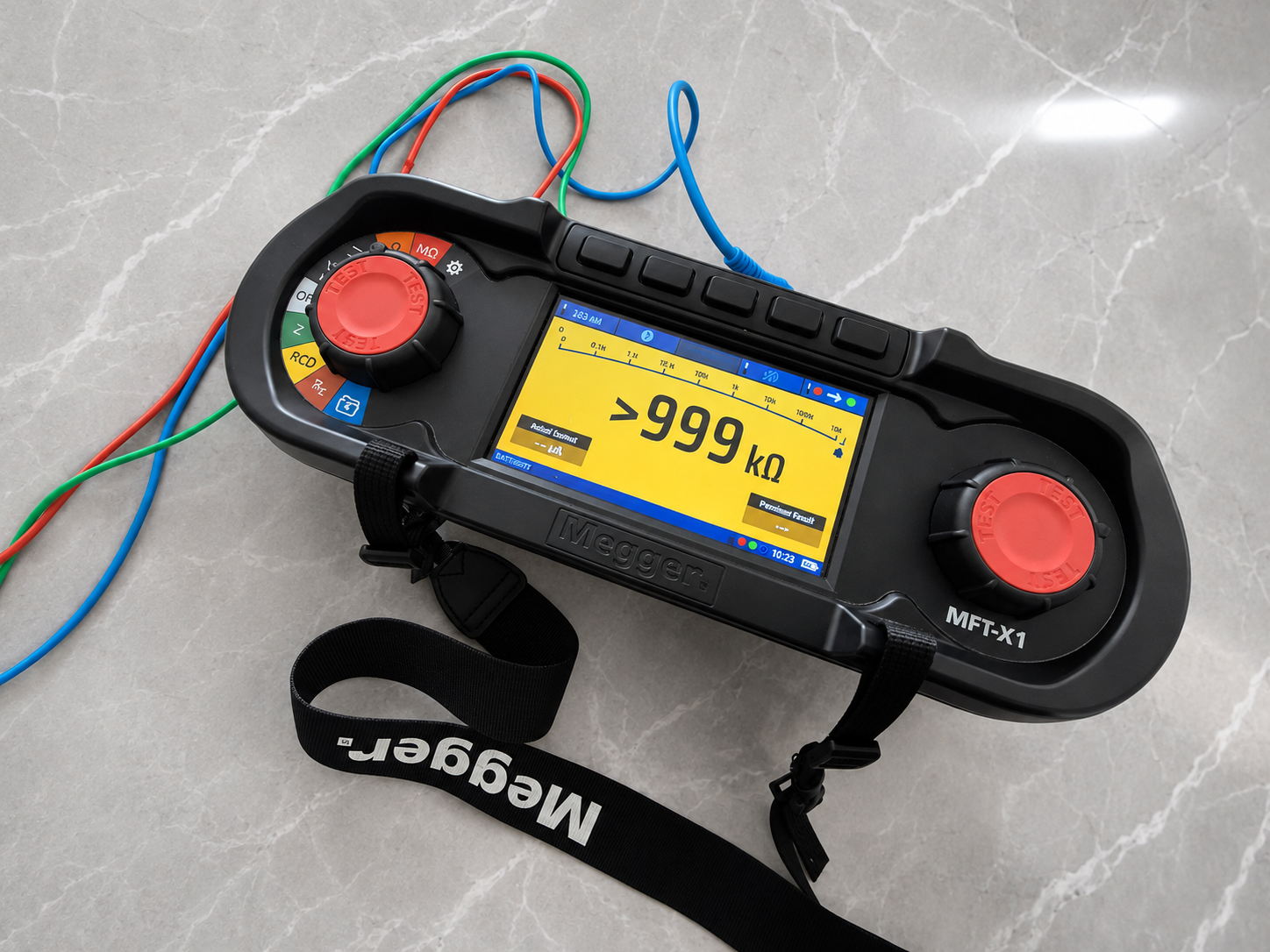
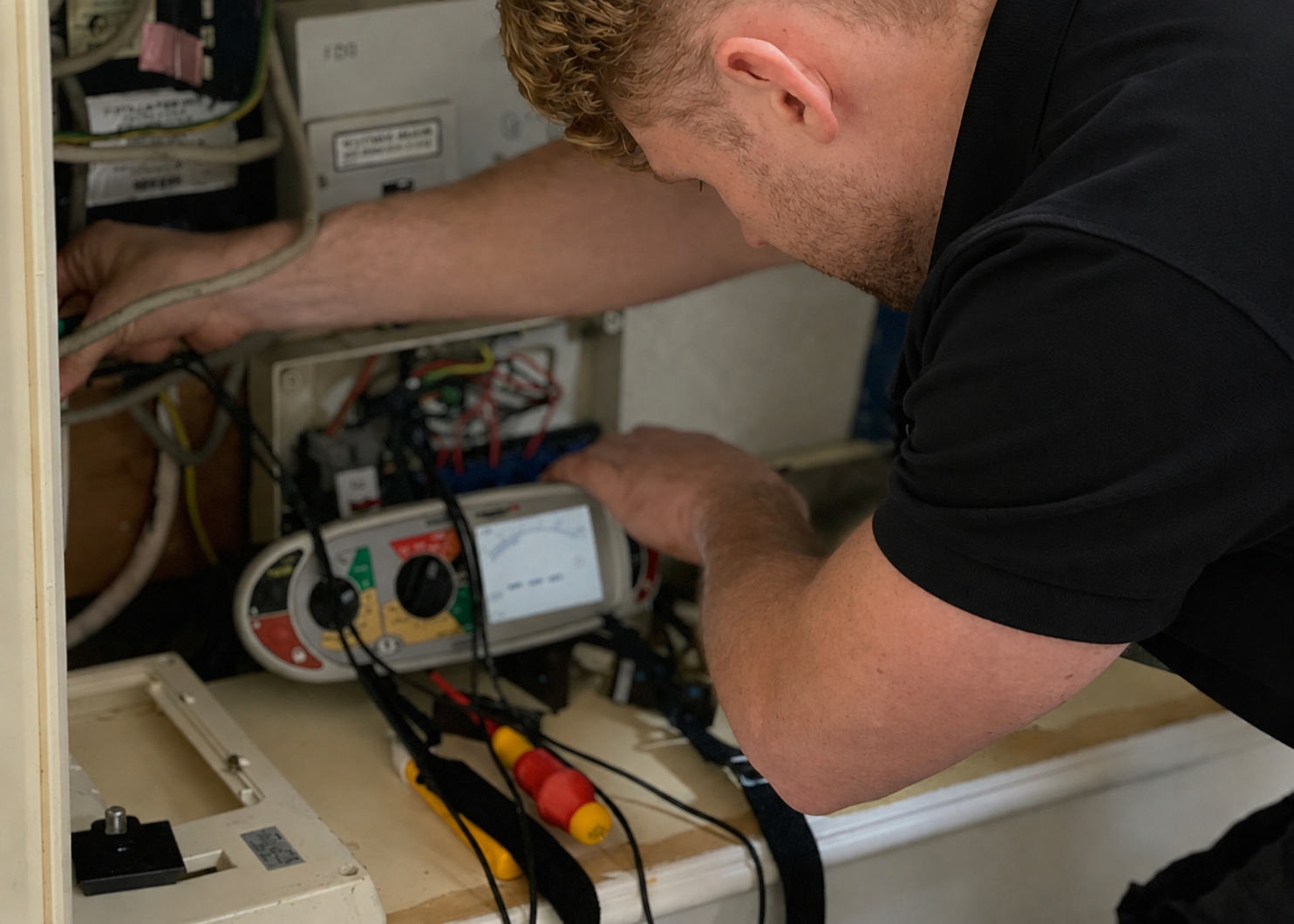
We test rather than guess. Continuity and insulation resistance testing locate a short circuit precisely, down to the section of cable or the accessory responsible. Loop impedance testing confirms the circuit will disconnect fast enough under fault conditions in future. And where overload is suspected, we assess the actual load against the cable and breaker rating rather than simply telling you to use less power.
Every test is carried out by someone with a minimum of 18 years' experience, Part P registered and insured, and every result is recorded and certified to BS 7671.
Common Questions
What's the difference between a breaker and a fuse?
A fuse contains a thin wire that melts and has to be replaced once it's blown. An MCB (miniature circuit breaker) is a mechanical switch that trips and can simply be reset once the fault's cleared. Almost every UK home has MCBs now; the old fuse-wire boards are rare and usually well overdue replacement anyway.
Can too many appliances on one extension lead trip a breaker?
Yes, and it's one of the most common causes we see. A kettle, a heater and a microwave sharing one extension lead can easily pull more current than a single socket circuit is rated for. The fix is usually spreading the load across different circuits or sockets, not a bigger breaker.
My breaker trips the instant I switch it back on. What does that mean?
An instant trip, before anything's even switched on at the socket, points to a short circuit or a badly damaged cable rather than an overload. That's a genuine fault in the fixed wiring and it needs testing, not repeated resetting.
Is it safe to use that circuit while I wait for an electrician?
If the breaker has tripped, leave it off and don't force it back on repeatedly. If it's holding but you're not confident why, it's worth switching it off yourself until it's been looked at. A circuit that's overloaded or has a developing fault is one you want tested rather than trusted.
Will a bigger breaker stop it tripping?
It might stop the tripping, but that's the problem, not the solution. The breaker is rated to the cable it protects. Fit one that's too big and the cable can overheat well before the breaker ever trips to protect it. That's a genuine fire risk, not a fix.