MCB: Miniature Circuit Breaker
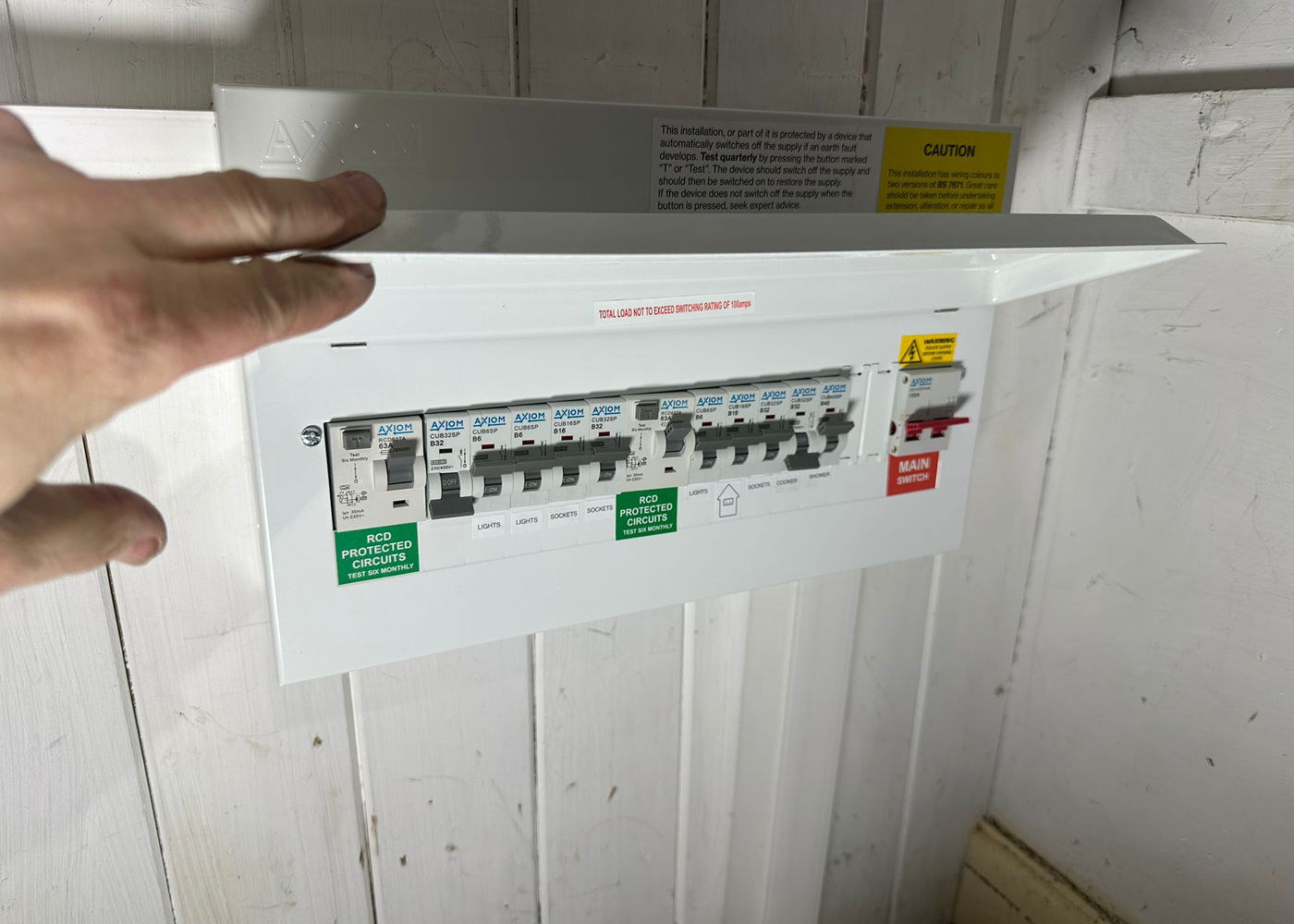
The narrow switches, usually labelled B6, B16 or B32. An MCB protects a circuit from overload and short circuit by tripping when too much current flows through it. Either gradually, from too many appliances drawing power, or instantly, from a fault. It does not protect against earth leakage. That's a different job, done by a different device.
RCD: Residual Current Device
The wider switch with a Test button, usually covering a group of circuits. An RCD compares the current flowing out to a circuit against the current returning, and trips within milliseconds if they don't match. Which means current is escaping to earth somewhere, through a fault, damaged cable, or failing appliance. This is what protects people from electric shock. On a split-load board, one RCD covers roughly half the circuits, which is why one earth fault can take out a whole group at once.
RCBO: RCD + MCB, Combined
Does both jobs. Overload/short-circuit protection and earth leakage protection. In a single device, fitted to a single circuit rather than a group. A board fitted entirely with RCBOs means every circuit has its own individual protection, so a fault on one never takes out any other. It's the modern standard for new installations and a common upgrade on older split-load boards.

AFDD: Arc Fault Detection Device
A newer type of protection that specifically detects the electrical signature of arcing. The same phenomenon behind a lot of the sparking, buzzing and burning-smell faults covered elsewhere in these guides. And disconnects before it develops into a fire. Increasingly specified for higher-risk premises: houses in multiple occupation, care settings, and buildings where people sleep and might not notice a developing fault. Not universally required, but worth discussing for higher-risk properties.
SPD: Surge Protection Device
Protects the property's wiring and connected equipment from voltage spikes. Caused by lightning strikes on the network, or switching events on the wider grid. Not something that prevents everyday faults, but worth considering if you have sensitive electronics, home automation, or live somewhere with a history of surge-related equipment damage.
What older boards typically lack
Fuse-wire boards. The ones with a thin wire that melts and needs replacing, rather than a switch that resets. Predate current RCD requirements almost entirely. If your board still has fuse wire, or is an early all-MCB board with no RCD protection at all, it's very likely missing protection that modern regulations now require for the majority of circuits. This is usually one of the first things flagged on an EICR.
How we assess yours
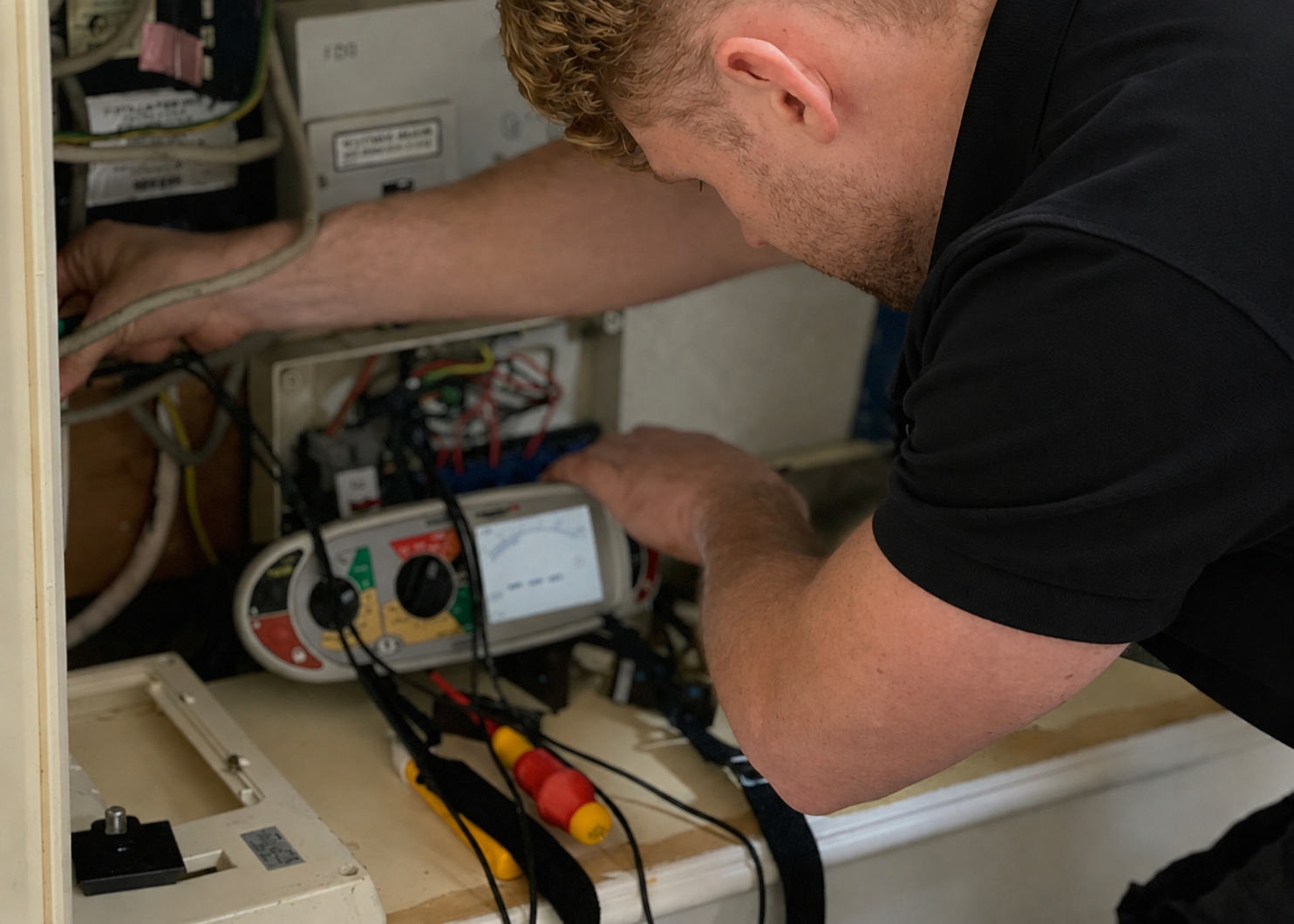
We open the board, identify exactly what protection is fitted and where, and test that it's actually working to specification. A device can be the right type and still have drifted out of its rated tolerance with age. If an upgrade is genuinely worthwhile, we'll explain specifically why for your property, not as a default recommendation. If your existing board is sound, we'll say that too.
Common Questions
How do I know which type of consumer unit I have?
Open the cover and count the wide devices with a Test button. None, and it's an all-MCB board with no earth fault protection at all, rare now and worth upgrading. Two wide devices covering groups of the narrower switches, it's split-load. A wide device on every single circuit, that's RCBOs throughout. If you're not sure, a photo sent to us is usually enough for us to tell you.
Is my old fuse-wire board actually dangerous?
Not automatically dangerous if it's been well maintained, but it almost certainly lacks RCD protection entirely, which modern regulations require for the vast majority of circuits. That's a genuine safety gap, not just an inconvenience, and it's usually one of the first things we'll flag on an EICR.
Do I need AFDD or surge protection, or is that just upselling?
Neither is legally required for every installation, and we won't tell you that you do if you genuinely don't. AFDDs are increasingly specified for higher-risk properties (houses in multiple occupation, care settings, buildings with sleeping risk) and surge protection is worth considering if you have sensitive electronics or live somewhere prone to lightning-related surges. We'll give you a straight answer based on your actual property, not a default upsell.
Can I mix RCBOs and a split-load RCD setup on the same board?
Yes, and it's a common, sensible way to upgrade gradually. High-priority circuits. A home office, a freezer, anything you don't want taken out by an unrelated fault. Can be moved to individual RCBOs while lower-priority circuits stay on the shared RCDs, spreading the cost of a full RCBO upgrade over time.
How often should a consumer unit be replaced?
There's no fixed lifespan, but a well-installed modern board can comfortably last decades. Replacement becomes worth discussing when the board is a pre-RCD fuse-wire type, when it's physically damaged or scorched, or when an EICR identifies it as a genuine safety issue rather than just old-fashioned.