Repairs we carry out
Emergency work covers a lot of ground. In a typical week that means:
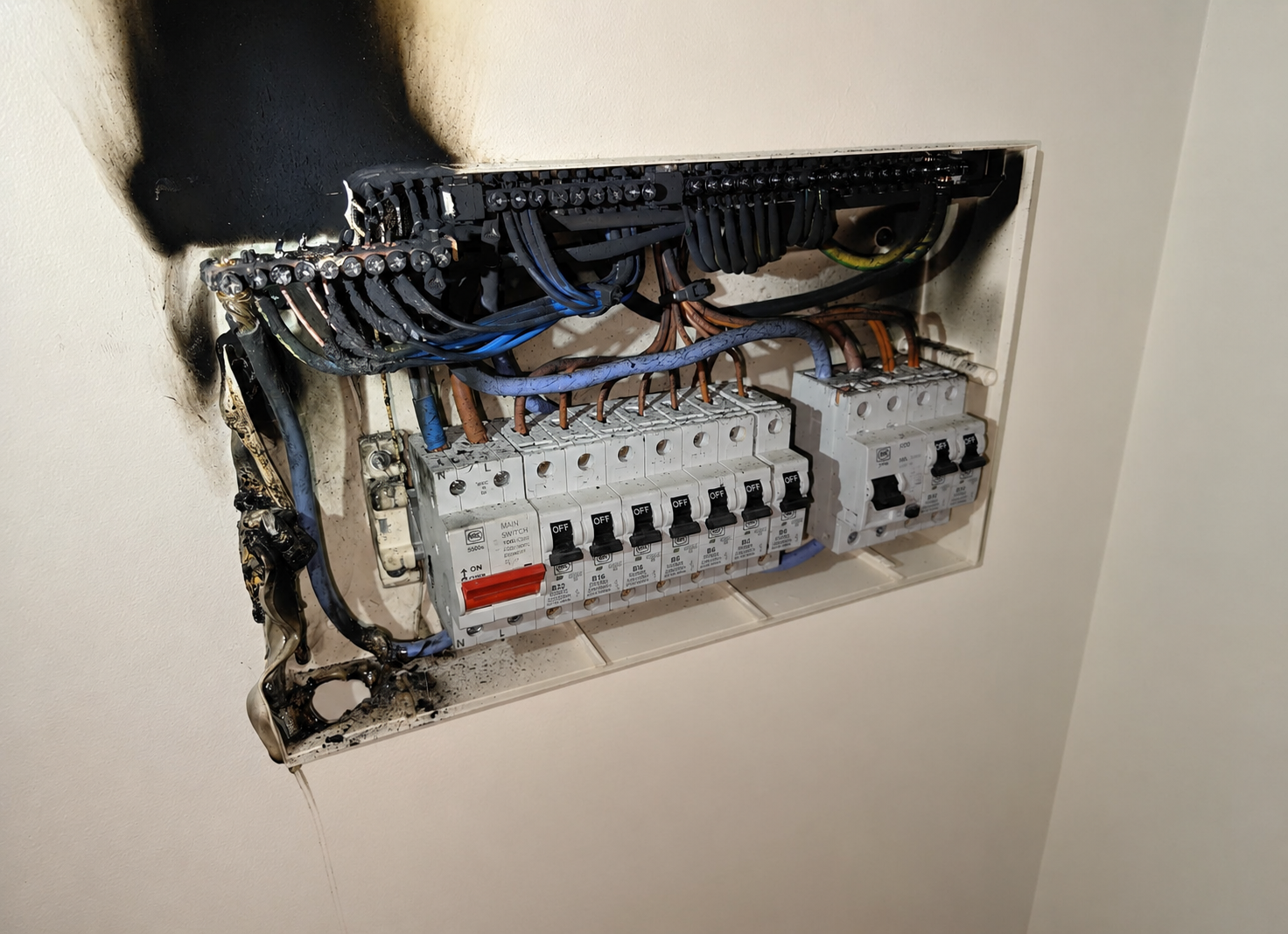
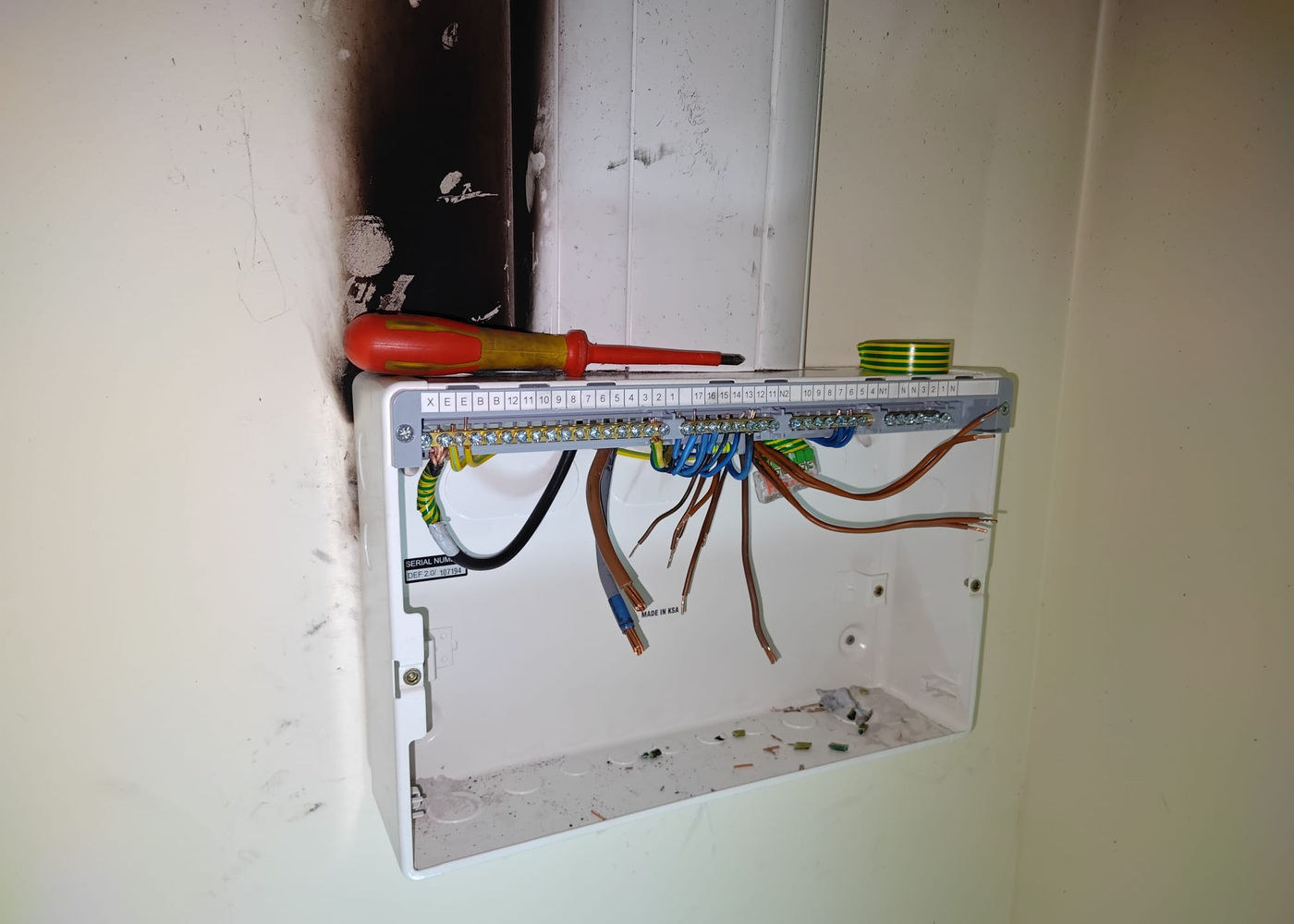
- Burnt or scorched sockets and switches. Replaced, and the cause of the overheating found rather than covered up.
- Damaged and failed cable. Sections re-run where a cable has been drilled through, chewed by rodents, or degraded with age.
- Consumer unit faults. Failed RCDs, welded contacts, burnt busbar connections, overheating neutral bars.
- Water-damaged electrics. Leaks through ceilings into light fittings, flooded cellars, rain into external accessories.
- Storm and impact damage. Pulled-down overhead supplies to outbuildings, damaged external conduit.
- Failed circuits. Cooker, shower, immersion and ring final circuits restored.
- Emergency rewiring of a circuit or section where a repair genuinely isn't viable.
Make safe first
Not every emergency can be finished in one visit, and pretending otherwise helps nobody. Where a full repair needs parts we don't carry, or where the extent of damage only becomes clear once things are opened up, the priority is to leave the property safe and as usable as possible: the faulty circuit isolated and clearly labelled, everything else restored, and a written explanation of what's outstanding.
You'll get a firm price and a date for the follow-up before we leave. What you won't get is a property left dead overnight because one circuit needs a part ordering.
Why the cause matters more than the symptom
A scorched socket is a symptom. Replace it without asking why it overheated and you'll be replacing another one before long. Overheating almost always comes down to one of three things: a loose termination, a connection carrying more current than it was designed for, or degraded conductors that have lost their ability to shed heat.
So when we replace a burnt accessory we check the terminations either side of it, measure the loading on the circuit, and look at what else shares it. That's usually a ten minute job and it's the difference between a repair and a temporary reprieve.
Certification and paperwork
Every repair is tested before we leave and certified appropriately. A Minor Electrical Installation Works Certificate for most repairs, or an Electrical Installation Certificate where a new circuit has been installed. Landlords and letting agents get the paperwork emailed the same day, along with photographs of the fault and the finished work.
All work is completed to BS 7671, and it's insured and guaranteed.
How the repair is carried out
Make safe comes first, then the proper repair. Damaged cable, scorched accessories and failed protective devices are replaced with compliant parts rather than patched, and the circuit is retested before it carries load again.
Every electrician attending has at least 18 years in the trade, is Part P registered and insured for the work carried out. Knowing when a component can be repaired and when it has to be replaced outright is judgement built over years, not a decision made to save an hour.
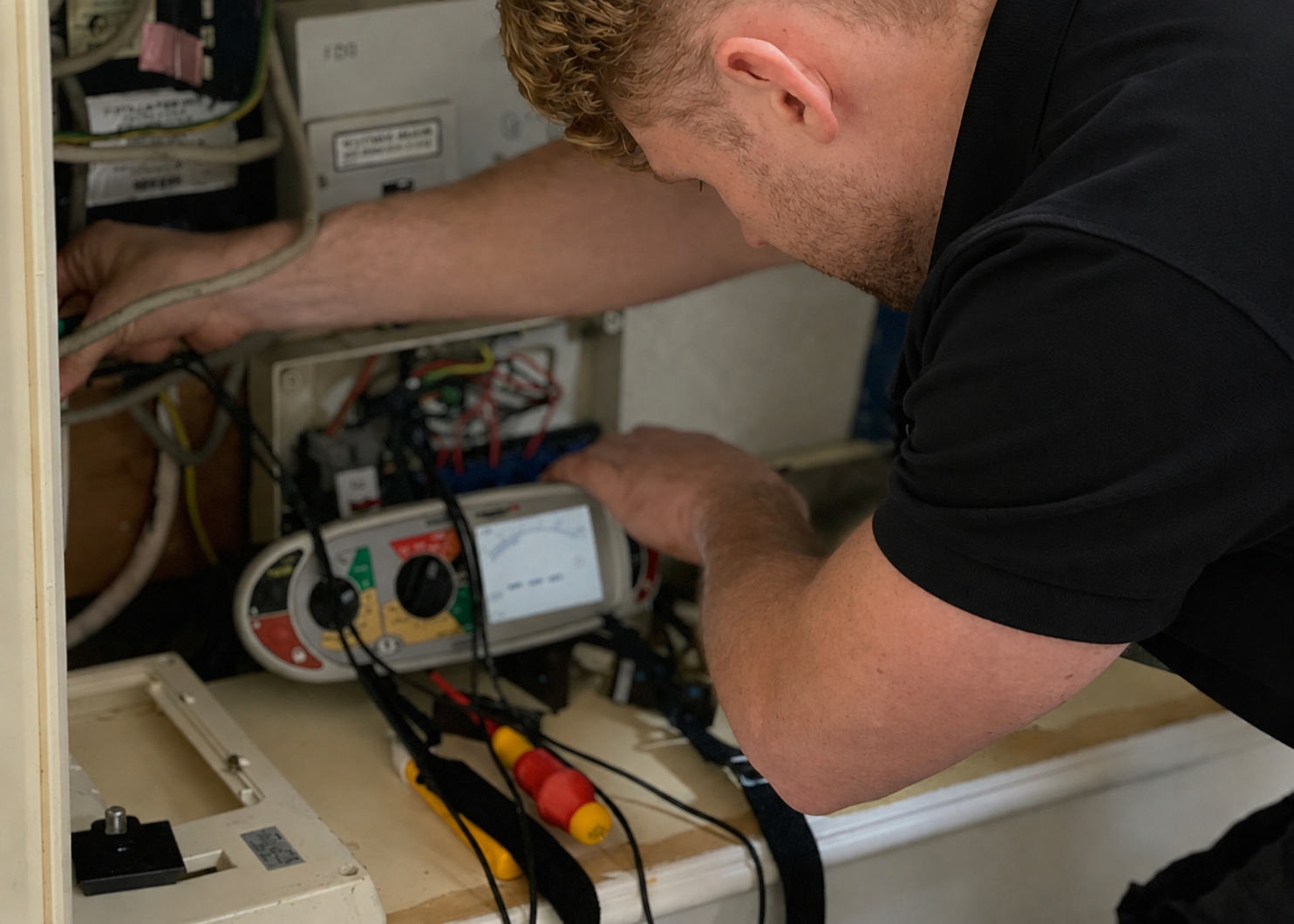
The repair is then proved with calibrated multifunction testers: continuity, insulation resistance, polarity, loop impedance and RCD timing. The readings are recorded and you receive certification to BS 7671 confirming the circuit is safe to use.
Common Questions
Can you fix it on the first visit?
Usually. We carry common accessories, cable, breakers and RCDs, so most repairs are finished the same visit. Where a specific part is needed we make the installation safe, restore everything we can, and return with the part.
A leak has come through my ceiling light. What should I do?
Switch that lighting circuit off at the consumer unit and leave it off. Don't operate the switch to test it. Water and electricity in a ceiling void is one of the situations where we'd always rather come out. Once dry, the fitting and any affected cable need inspecting before the circuit goes back into use.
Do you repair or replace?
Whichever is genuinely right. A single failed accessory gets replaced. A cable damaged in one spot gets a section re-run. Where an installation is so far gone that repairs won't hold, we'll say so and price the alternative rather than keep patching it.
Will I get a certificate?
Yes. Minor works get a Minor Electrical Installation Works Certificate; new circuits get an Electrical Installation Certificate. Both include the test results.
Do you work on commercial premises?
Yes, shops, offices, salons, restaurants and small industrial units, including three-phase supplies and distribution boards. We'll work around trading hours where that's possible.