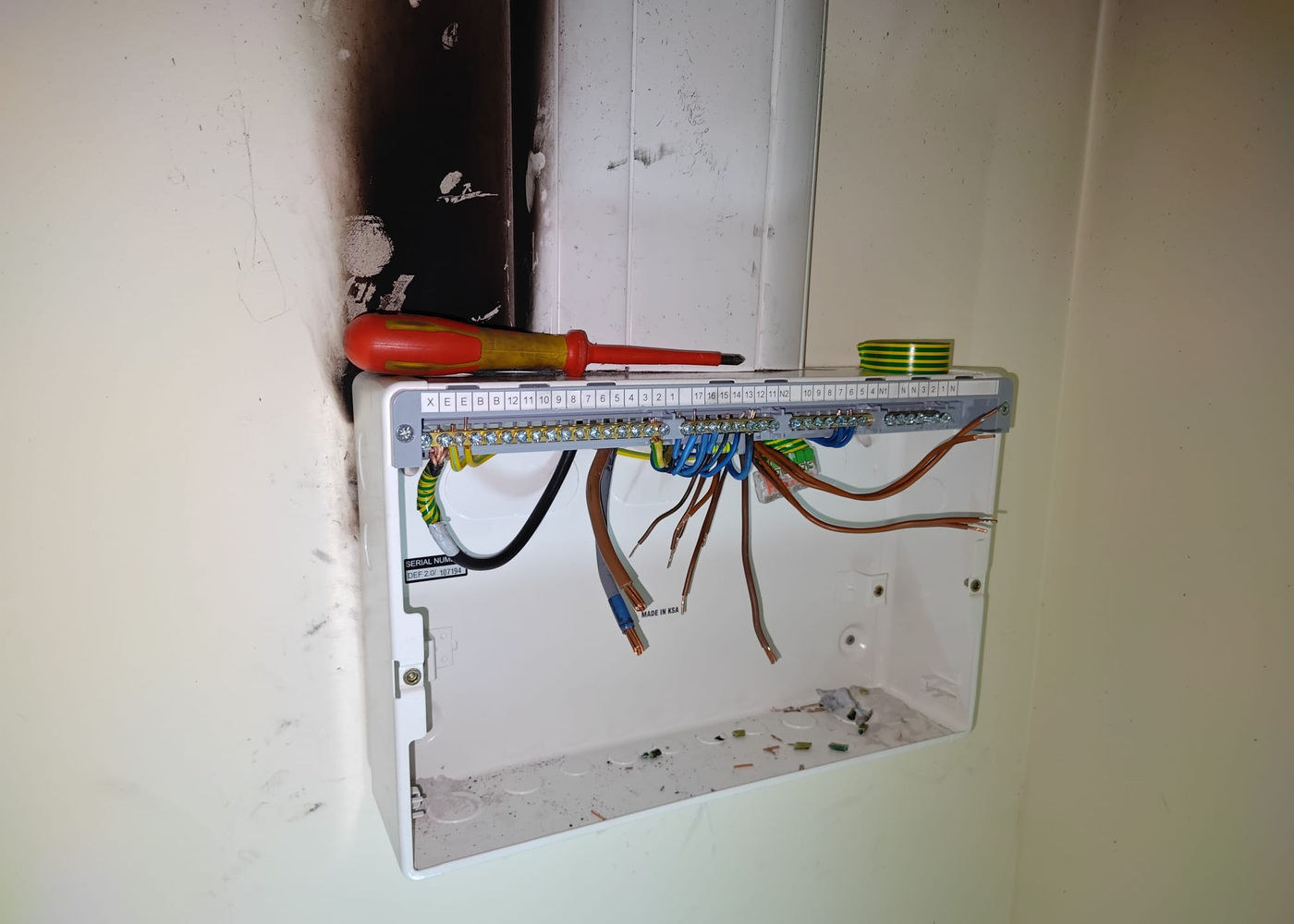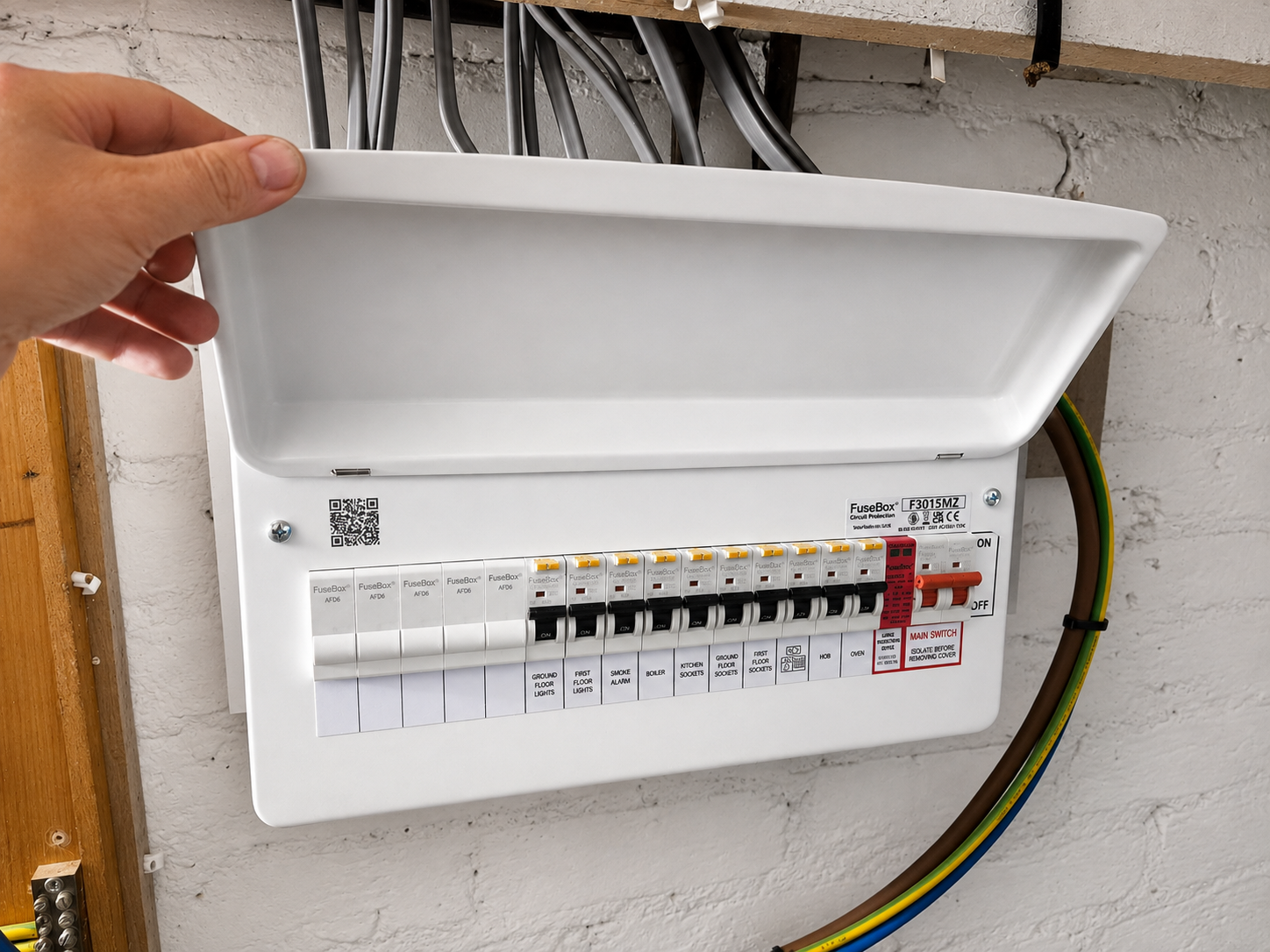
First, work out what actually tripped
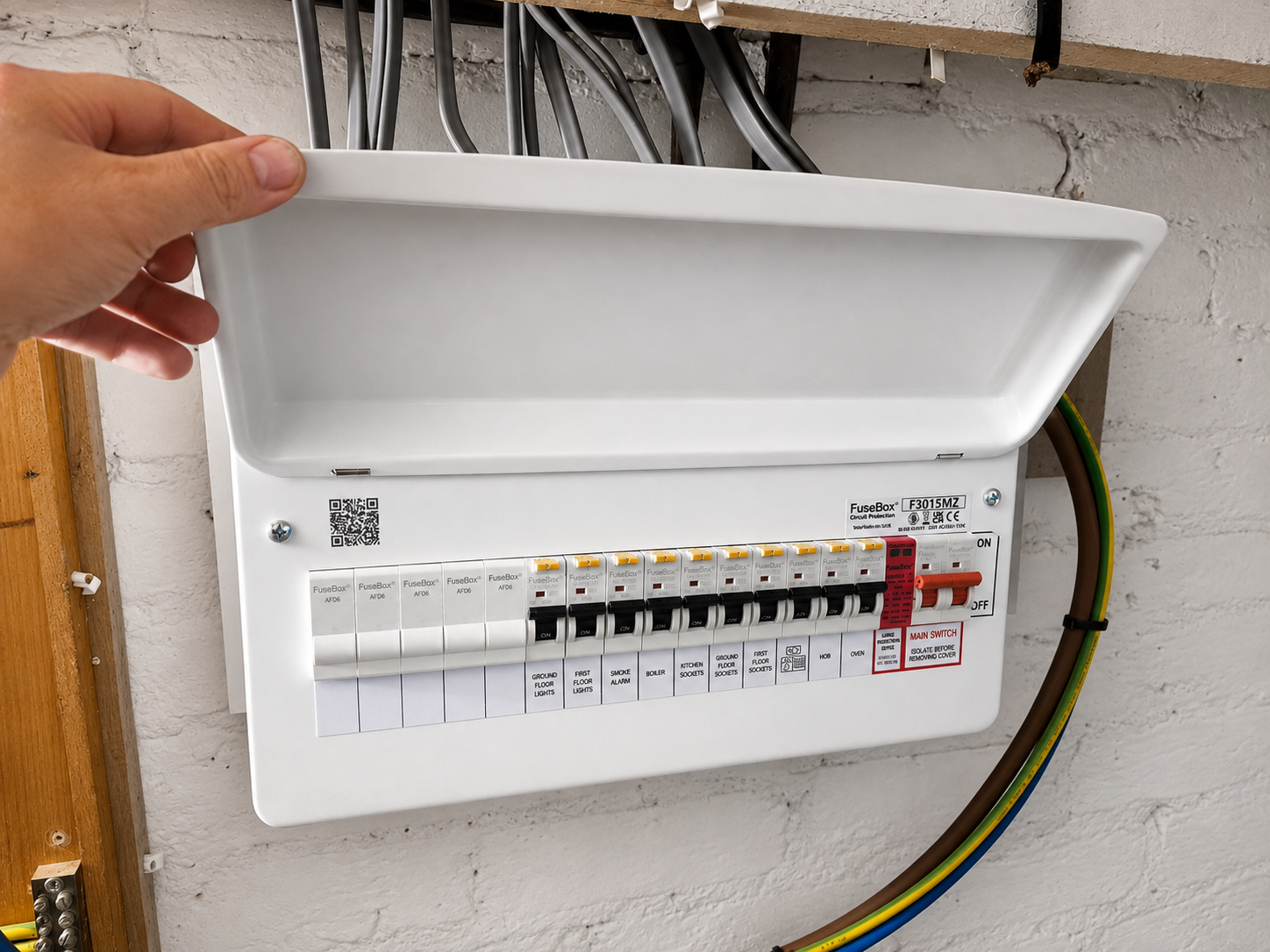
Open the consumer unit and look, because the answer changes what's wrong.
- A single MCB (a small switch, usually marked B6, B16, B32). The fault is on that one circuit. Overload or a short.
- An RCD (a wider device with a "T" or "Test" button). Earth leakage somewhere across every circuit it covers, which is why half the house goes dark at once.
- An RCBO (combines both, one per circuit). Narrows it to a single circuit, which makes life much easier.
- The main switch: something significant. Stop and call.
If the whole street is out it's a network fault, not yours. If it's just you and the main switch is off, that's ours to sort.
Why it trips when it does
The timing is the biggest clue, and it's usually the first thing we ask about.
- Trips when the shower runs. Electric showers are heavy loads and their heating elements fail progressively, leaking to earth as they go. A shower that trips the RCD only when it's hot is a classic failing element.
- Trips in the early hours. Almost always the immersion heater, a heating timer, or a fridge/freezer defrost cycle kicking in on a timer while everyone's asleep.
- Trips when it rains. Water into an outside light, a garage or shed supply, or a junction box under a flat roof.
- Trips with the kettle and toaster together. That's overload rather than a fault. Too much current on one circuit. And the answer is usually redistribution rather than a bigger breaker.
- Trips at random with nothing obvious running. Cumulative earth leakage from many appliances, a degrading cable, or a failing RCD that has become over-sensitive with age.
Half the house has no power
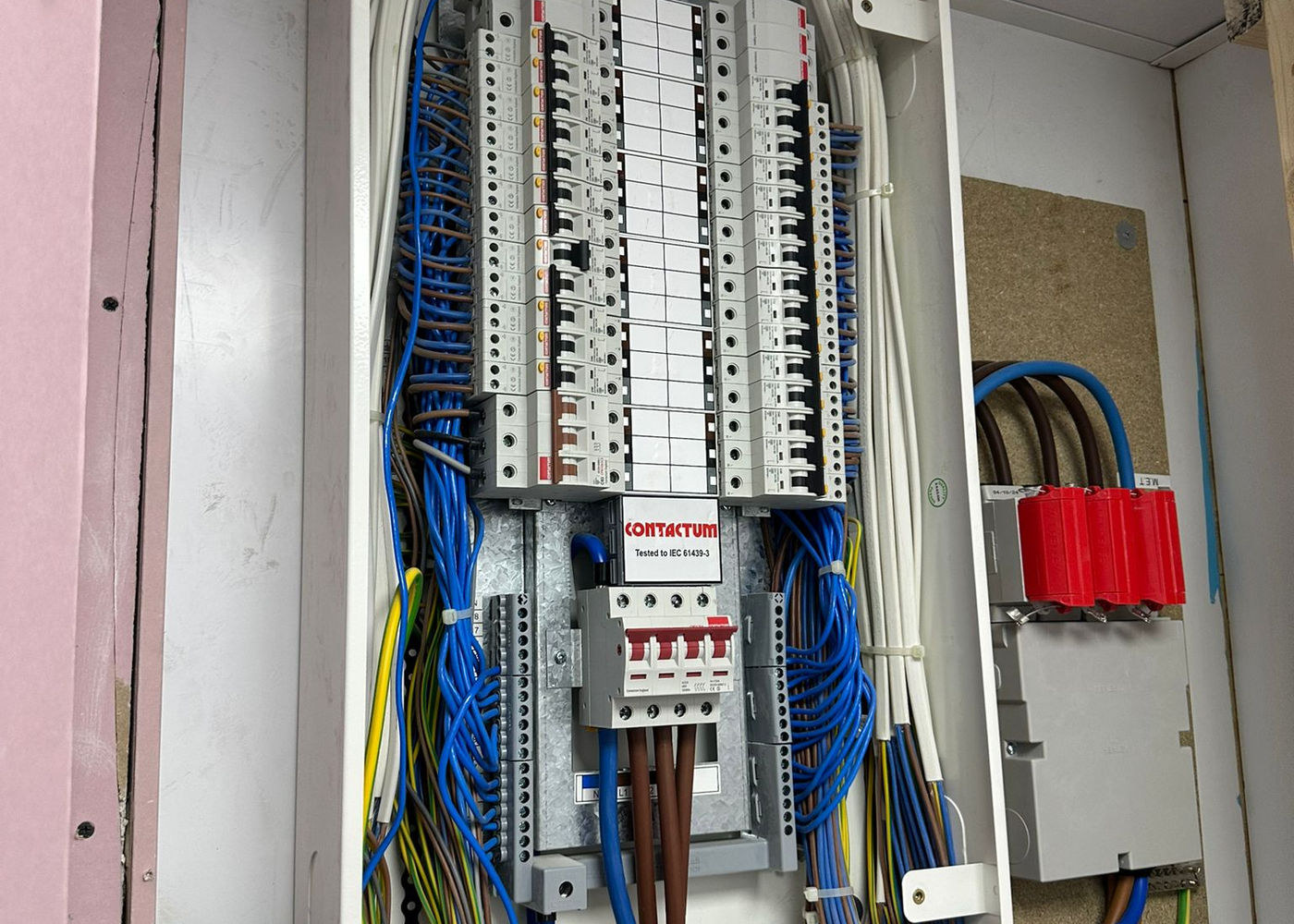
This one worries people more than it should. On a split-load consumer unit. The standard arrangement for years. Circuits are divided across two RCDs. When one trips you lose everything on that half: often upstairs lights and downstairs sockets, or some equally unhelpful combination. The other half carries on as normal, which is why it looks like something exotic has happened when in fact one earth fault has taken out a group of circuits.
The fix is to identify which circuit within that group is leaking, and that means splitting the board down and testing rather than switching things on and off hopefully.
What not to do
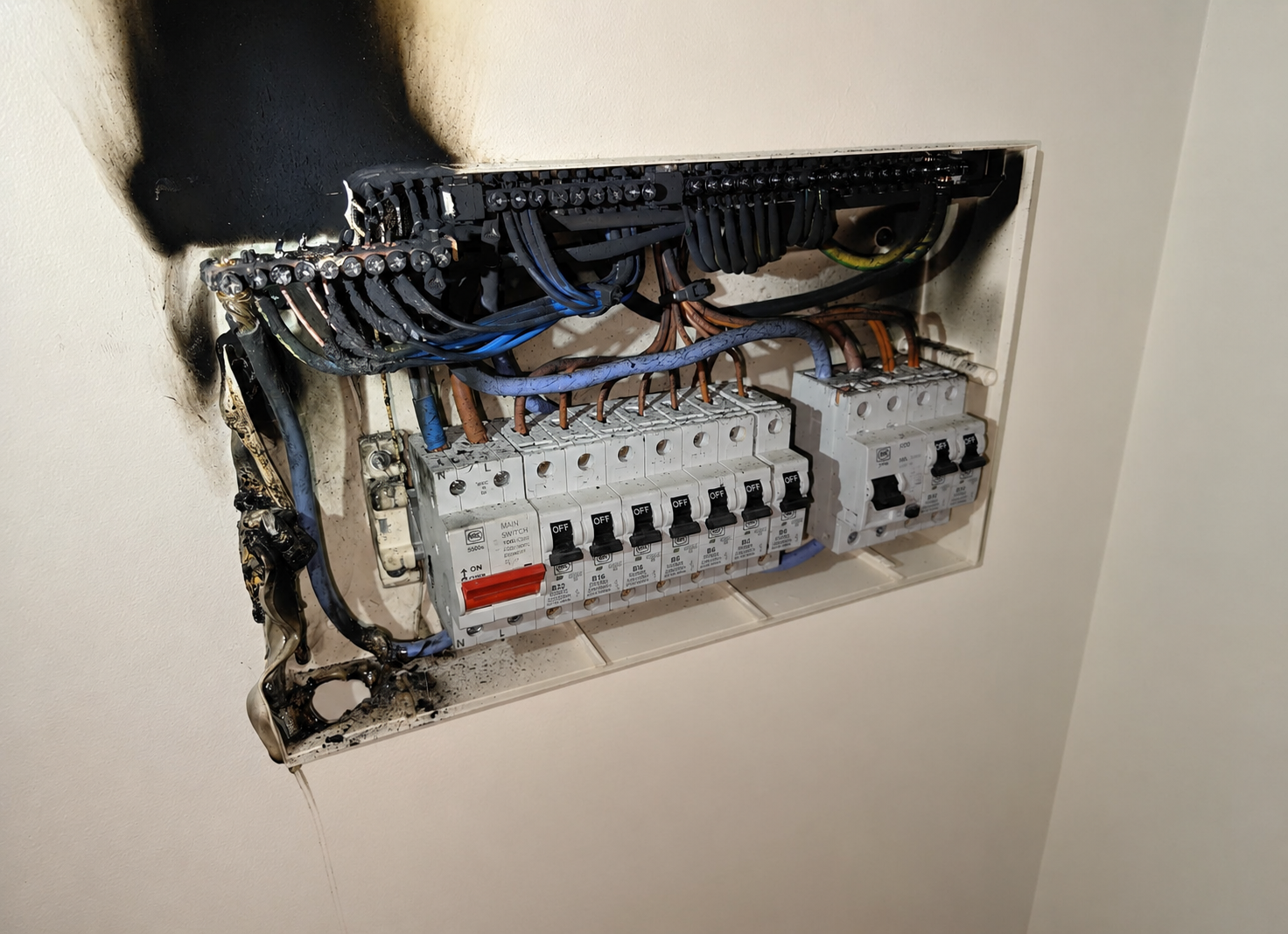
Don't keep resetting it. Each reset re-energises a faulty circuit, and if the fault is a deteriorating cable or a loose connection you are heating it a little more every time. Don't fit a larger breaker to stop the nuisance. That removes the protection rather than the fault. And don't tape the switch. We have seen it.
Switch off the circuit that's causing it, leave it off, and ring us. If you can't work out which one it is, switch off at the main switch and call.
How we stop it tripping again
A breaker that will not stay in is protecting you from something real. We split the board and test each circuit separately to find which one is leaking or overloaded, repair the cause, then prove the circuit before restoring it rather than simply pushing the switch back up.
The person doing that has a minimum of 18 years on the tools, is registered under Part P and is insured for the work. That experience is what separates a fault genuinely cleared from one that will trip again the next wet week.
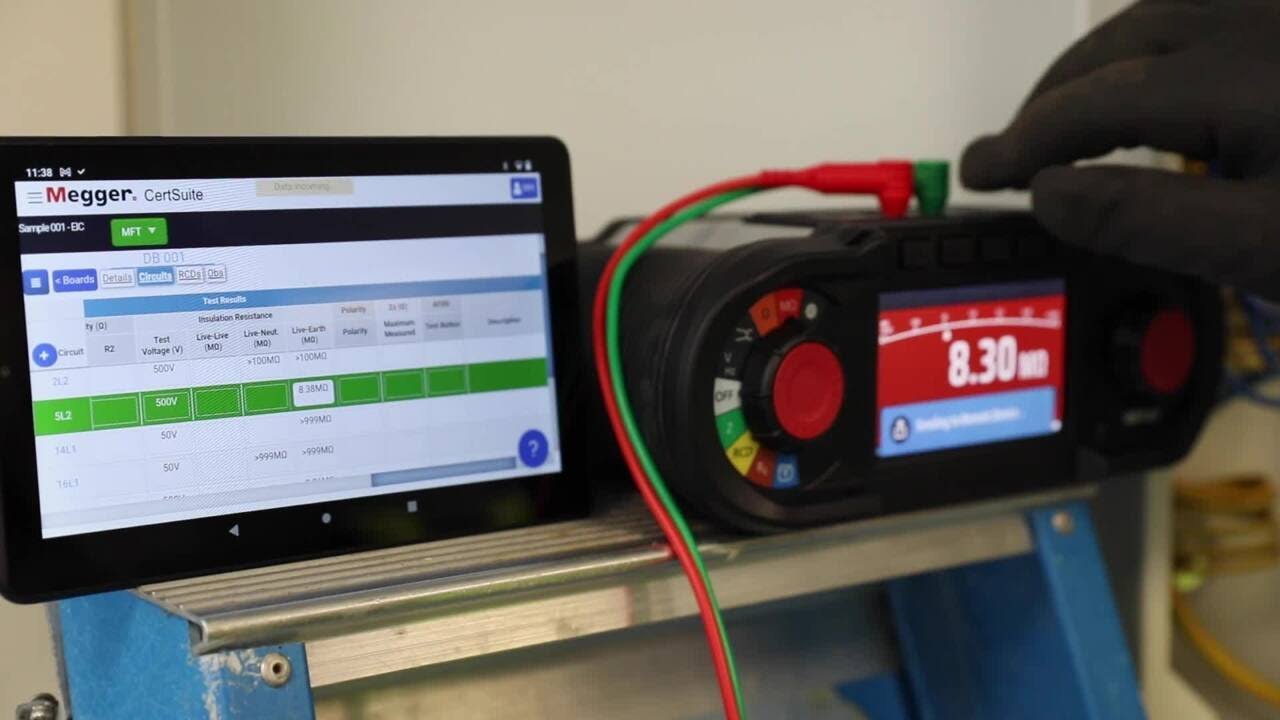
Insulation resistance testing finds leakage to earth, RCD ramp and trip timing confirm the protective device still operates within its required disconnection time, and loop impedance verifies the circuit will disconnect fast enough under fault. Every reading is recorded and certified to BS 7671.
Common Questions
Why does my fuse box keep tripping at night?
Nine times out of ten it's something on a timer. An immersion heater, storage heating, or a fridge or freezer defrost cycle. These run while the house is quiet, so a small earth leakage fault only shows itself then. Note the time it happens; it narrows the search considerably.
Why does my RCD trip when I use the shower?
Electric shower elements fail gradually and leak current to earth as they deteriorate, usually worst when hot. If your RCD trips only during or shortly after a shower, the element is the prime suspect. It's a common and straightforward repair.
Is it safe to keep resetting the breaker?
No. The breaker tripped for a reason. Repeated resetting re-energises the fault and can make a deteriorating cable or loose terminal considerably worse. Leave that circuit off and get it looked at.
Half my house has no power but the rest is fine. Why?
Your consumer unit almost certainly splits circuits across two RCDs. One has tripped, taking out every circuit on its side. It's a single earth fault affecting a group, not several separate problems.
Can a faulty appliance trip the whole house?
Easily. A washing machine, dishwasher, immersion heater or older fridge with a failing element can leak enough current to earth to trip a 30 mA RCD, and everything sharing that RCD goes off with it. Unplugging appliances one at a time is a reasonable first test if you're comfortable doing it.